
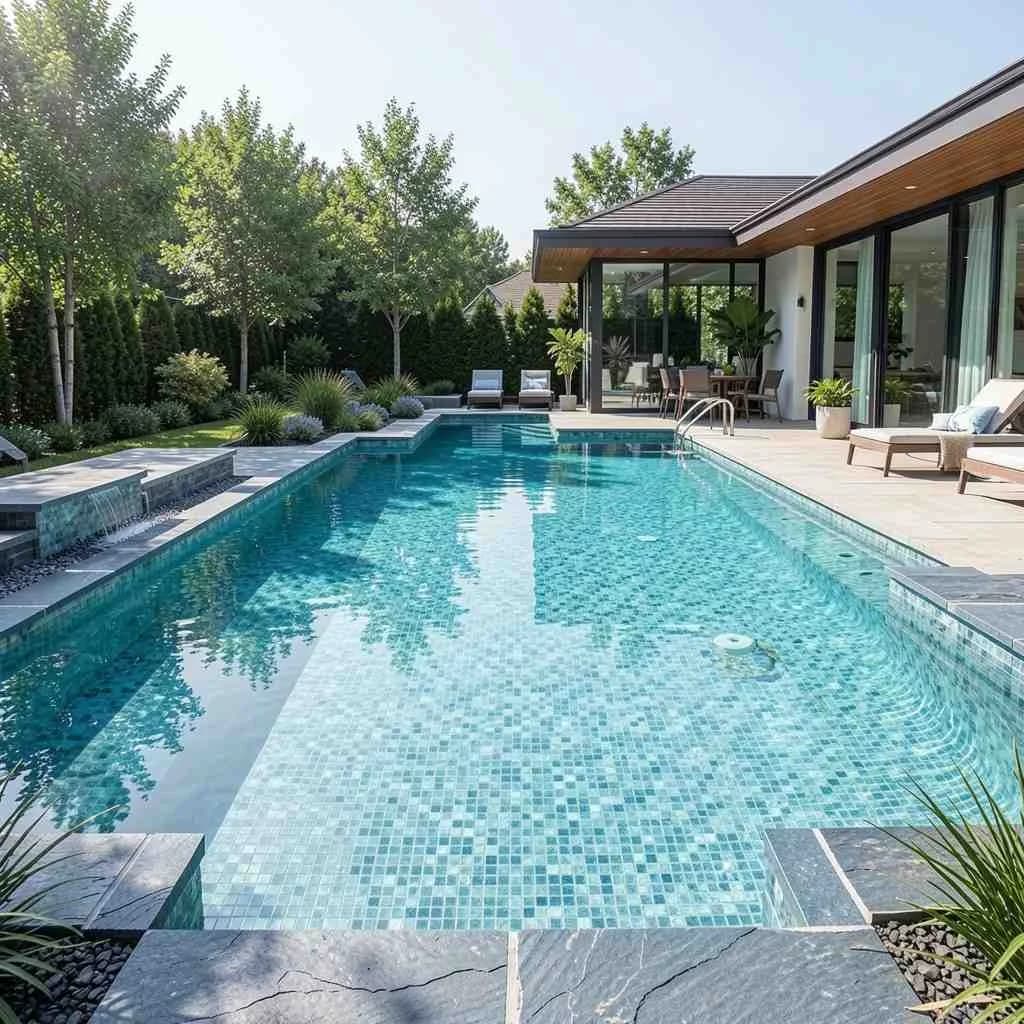
A swimming pool is one of the most significant outdoor investments a Melbourne homeowner makes, and the tiling is what determines how long it lasts and how it looks for the next fifteen to twenty years. Pool tiling is fundamentally different from any other tiling project: the tile must withstand constant immersion in chemically treated water, thermal cycling from Melbourne's cold winters to hot summers, the mechanical stress of water pressure and hydrostatic forces in the shell, and the specific safety requirements that apply to any pool environment.
Whether you are building a new pool in Melton or Caroline Springs, retiling an existing pool in Sunbury or Werribee, or adding a tiled surround and coping to a fibreglass pool across Melbourne's western suburbs, getting the specification right from the start prevents the most common and expensive pool tiling failures: delaminating tiles, failed waterproofing, cracking grout from pool chemical attack, and coping tiles that become dangerously slippery when wet.
This guide covers the full scope of pool tiling in Melbourne: tile types and their performance in pool environments, waterproofing requirements specific to concrete pool shells, coping tile selection, pool surround specifications, and realistic costs for 2026.
Pool Tiling vs Other Tiling: What Makes It Fundamentally Different
Pool tiling is the most demanding tiling environment encountered in residential construction. The conditions a pool tile must tolerate simultaneously are unlike any indoor or even standard outdoor application:
- Constant immersion in chemically treated water. Swimming pool water is maintained at pH 7.2-7.8 and contains chlorine, algaecide, and often saltwater chlorination chemistry. These chemicals are relatively mild individually, but constant immersion in their combined chemistry over years is highly demanding on tile adhesives, grouts, and the tile body itself. Not all tiles — and not all adhesives and grouts — are rated for this exposure. Using the wrong specification produces grout failure and tile delamination within two to three pool seasons.
- Hydrostatic pressure from the pool shell. A filled pool exerts enormous hydrostatic pressure against the pool shell and any tiled surface. This pressure fluctuates as water level changes and as the pool is emptied for maintenance. The tile system must accommodate this pressure without delaminating. A flexible, pool-rated adhesive is not optional in this environment; it is a baseline requirement.
- Thermal cycling. Melbourne pools experience temperatures from near-freezing in winter (particularly in the western suburbs) to 35°C+ in summer. The pool shell, adhesive, and tile expand and contract with these temperature changes. Rigid adhesive systems crack under this movement.
- UV exposure on pool surrounds and coping. Pool surround tiles and coping are exposed to Melbourne's intense UV radiation — particularly from October through April. Tiles must be UV-stable; adhesives and grouts must not degrade under UV exposure on exposed surfaces.
- Constant wet-dry cycling on surrounds and coping. The pool surround and coping experience constant wet-dry cycles as bathers exit the pool and walk on these surfaces. This cycling is more aggressive than typical outdoor exposure and accelerates degradation of undersized grout joints and non-pool-rated adhesives.
Q: Why is pool tiling different from regular tiling in Melbourne?
A: Pool tiling in Melbourne must withstand conditions no other tiling environment faces simultaneously: constant immersion in chemically treated water, hydrostatic pressure from the pool shell, thermal cycling from Melbourne's cold winters to hot summers, and UV exposure on pool surrounds. These requirements mean standard tile adhesives, grouts, and even many outdoor-rated tiles are not appropriate for pool use. Pool-specific waterproofing, flexible pool-rated adhesive, and epoxy or pool-grade grout are all mandatory for a Melbourne pool tiling installation that will last fifteen or more years. Ali Star Tiling installs to pool-specific specifications across Melbourne's western and northern suburbs.
Pool Tile Types: What Works in Melbourne Pools
Not all tiles are suitable for pool installation. The key requirements for tiles used in the pool interior (below the waterline) and at the waterline are: frost resistance (important for Melbourne's winter conditions), very low water absorption (less than 0.5% for submerged tiles), chemical resistance to pool water chemistry, and dimensional stability under hydrostatic pressure. Here is how the main options compare.
Glass Mosaic Tiles — The Most Popular Pool Interior Choice
Glass mosaic tiles are the dominant choice for Melbourne pool interiors and waterline bands. Their near-zero water absorption (glass is essentially non-porous), excellent chemical resistance to pool water chemistry, and wide range of colours and finishes make them the most practical and most visually versatile option for pool use.
Glass mosaics for pools are typically 25x25mm to 50x50mm mounted on 300x300mm mesh sheets. The small format makes them highly flexible on curved pool walls and floors, and the continuous grout joints between small tiles provide excellent grip for pool floors — important for AS 4586 slip resistance requirements.
- Advantages. Near-zero water absorption, fully chemical-resistant, available in blue/green/grey/white colour families that work with water, flexible on curves, excellent slip resistance in textured finishes.
- Considerations. Higher grout joint area (more to clean) than large-format tiles. Premium cost relative to standard ceramic. Requires specific pool-grade adhesive and epoxy grout.
Porcelain Tiles — Pool Interior and Surround
Pool-rated porcelain tiles (frost-proof, less than 0.5% water absorption) are used for both pool interiors and pool surrounds in Melbourne renovations. Large-format porcelain is increasingly popular for pool surrounds and decks, while smaller-format textured porcelain is used for pool floors and walls.
For pool interior use, porcelain must be specified as pool-rated (frost-proof, suitable for submerged application). Not all outdoor-rated porcelain meets this standard — confirm the specific product's suitability for submerged pool use with your tile supplier before purchase.
- Advantages. Excellent durability, wide format range, contemporary aesthetic, lower grout joint area than mosaic.
- Considerations. Large-format porcelain on pool floors requires very precise levelling and full-bed adhesive coverage. Polished finishes are not appropriate for pool floors.
Bluestone and Natural Stone — Coping and Surrounds
Bluestone is the traditional and still-popular choice for pool coping tiles in Melbourne. Its natural texture provides excellent slip resistance, it handles Melbourne's thermal cycling well, and its grey-blue tones complement both pool water and the surrounding landscape. Honed or sawn-finish bluestone for coping and pool surrounds is a classic Melbourne combination that suits both contemporary and more traditional pool designs.
Natural stone is generally not recommended for submerged pool interior surfaces; the porosity and sensitivity to pool chemicals makes long-term performance inconsistent. For coping and surrounding areas that are wet but not continuously submerged, honed bluestone performs very well.
Ceramic Tiles — Limited Pool Application
Standard outdoor-rated ceramic tiles can be used on pool surrounds and partially-submerged areas with the correct specification, but are not generally recommended for fully submerged pool interior surfaces. The higher water absorption of ceramic (even outdoor-rated grades) compared to glass mosaic and pool-rated porcelain makes ceramic less durable in the constant-immersion environment of a pool interior.
Q: What tiles are best for a swimming pool in Melbourne?
A: For Melbourne pool interiors and waterline bands, glass mosaic tiles (25-50mm, near-zero water absorption, chemical-resistant) are the most widely used and reliable choice. Pool-rated frost-proof porcelain is used for both pool interiors and pool surrounds. For coping tiles, honed or sawn-finish bluestone is the classic Melbourne choice — durable, naturally slip-resistant, and aesthetically versatile. Polished tiles are not appropriate for any wet pool surface. Ali Star Tiling specifies and installs pool-rated tiles for Melbourne pools across the western and northern suburbs.
Pool Waterproofing: The Most Critical Stage
Pool waterproofing for concrete pools is not the same as bathroom wet area waterproofing. A concrete pool shell that is not correctly waterproofed before tiling will develop water seeping into the shell structure, tile delamination from hydrostatic pressure, and over time structural damage to the pool shell and surrounding ground. For AS 3740 wet-area requirements, see our bathroom waterproofing Melbourne guide.
Types of Pool Waterproofing Systems
| System | Description | Best Application | Notes |
|---|---|---|---|
| Cementitious waterproofing membrane | A cement-polymer slurry applied in multiple coats to the concrete pool shell before tiling. Bonds directly to concrete. | New concrete pool shells and pool renovation where the existing surface is sound. | The most common system for Melbourne concrete pool tiling. Must be applied in multiple coats with fabric reinforcement at all cracks and junctions. |
| Epoxy-based waterproof coating | Solvent or water-based epoxy coating applied to the pool shell. | Pools where a very hard, chemical-resistant surface is needed before tiling. | Less flexible than cementitious systems — used where specific chemical resistance is the priority. |
| Sheet membrane (torch-on or adhesive) | A sheet waterproofing membrane bonded to the pool shell. | Complex pool shapes or where a single-application system is preferred. | Less common in residential Melbourne pool tiling but used in commercial pool construction. |
What Pool Waterproofing Must Cover
- The entire pool shell interior. Floor, all walls, and all junctions — not just the waterline area. The full submerged surface must be waterproofed.
- All cracks and construction joints. Any existing crack in the concrete shell must be cut out, filled, and reinforced with fabric tape before waterproofing. Applying membrane over an unrepaired crack produces a crack in the membrane at the same location.
- All penetrations. Pool light niches, return jets, main drain, skimmer box openings, and any other penetration through the pool shell must be sealed and waterproofed at the junction between the fitting and the shell before tiling.
- Coping rebate and bond beam. The top edge of the pool shell — the bond beam and coping rebate — must also be waterproofed as water regularly contacts these surfaces.
Curing Before Tiling
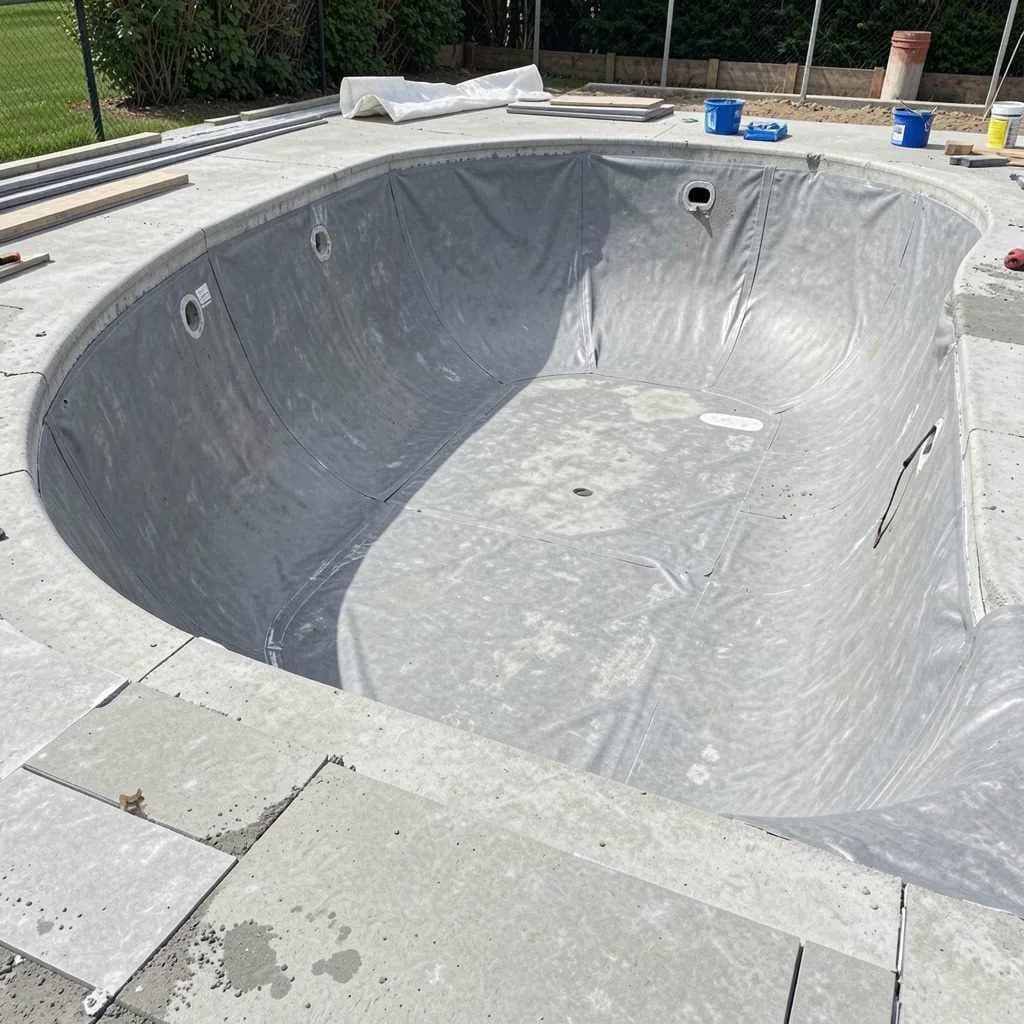
Pool waterproofing membranes must be fully cured before any tile adhesive is applied. Cementitious membranes typically require 24-72 hours minimum curing in Melbourne conditions. The cured membrane should be inspected for any pinholes, thin spots, or areas of inadequate coverage before tiling proceeds. Any defects in the waterproofing membrane will eventually manifest as tile failures — finding and addressing them before tiling is far less expensive than addressing them after.
Q: Does a concrete pool need waterproofing before tiling in Melbourne?
A: Yes. A concrete pool shell must be waterproofed before tiling to prevent water seeping into the shell structure, causing tile delamination from hydrostatic pressure and structural damage over time. Pool waterproofing is applied to the entire interior surface including all walls, floor, junctions, and penetrations (lights, jets, drains). Cementitious polymer membranes applied in multiple coats with fabric reinforcement at junctions and cracks are the most common system for Melbourne residential pool tiling. Ali Star Tiling installs pool-specific waterproofing as part of every pool retiling project.
Pool Coping Tiles Melbourne: Selection and Installation
Pool coping is the tile or stone that forms the edge of the pool — the cap where bathers sit, push off, and step out of the water. It is one of the most technically demanding tiling positions in a residential property:
- Constant wet-dry cycling. Coping tiles are splashed every time the pool is used and dry out between uses — a cycling pattern more aggressive than any other outdoor surface.
- Physical abuse. Bathers push off from coping, sit on it, and walk along it. The coping must handle significant physical loading without cracking.
- Pool chemical exposure. Pool water chemicals splash onto coping constantly. The coping tile, adhesive, and grout must all resist this chemical exposure.
- Safety requirement. Coping is where bathers step out of the pool — slip resistance is a genuine safety requirement, not an aesthetic preference. Australian Standard AS 4586 requires a minimum P4 wet pendulum rating for pool coping.
Coping Tile Options for Melbourne Pools
| Material | Finish | Slip Rating | Durability | Most Common Use | Notes |
|---|---|---|---|---|---|
| Bluestone | Sawn or honed | P4-P5 | Excellent | The Melbourne standard for pool coping | Classic look. Handles Melbourne's thermal cycling well. Available in standard 600x400mm coping profiles with bullnose edges. |
| Travertine | Honed or unfilled brushed | P4 | Good | Period homes and Mediterranean-style pools | Beautiful but requires regular sealing. Pool chemicals can etch unsealed travertine. Confirm acid resistance before specifying. |
| Porcelain (pool-rated) | Satin or textured | P4-P5 | Excellent | Contemporary pools | Contemporary alternative to stone. Must be frost-proof and rated for coping application. Bullnose edge profiles available. |
| Reconstituted stone | Textured | P4 | Good | Budget-conscious builds | Pressed concrete aggregate tile. Less premium appearance than natural stone but cost-effective. |
Coping Installation Requirements
Pool coping installation has specific technical requirements beyond standard outdoor tile installation:
- Overhang and drip edge. Coping tiles should overhang the pool wall by 30-50mm and incorporate a drip edge profile (rebated or bullnose underside) that directs water dripping from the coping back into the pool rather than running down the outside of the pool wall. This prevents the water staining and efflorescence that degrades pool walls behind poorly specified coping.
- Flexible adhesive and bedding. Coping tiles must be fixed with a flexible, pool-rated adhesive. The bedding must maintain the outward fall (away from the pool edge) so that rainwater drains away from the pool rather than running back into the water.
- Expansion joints at regular intervals. Coping runs longer than approximately 3-4 metres require expansion joints filled with flexible pool-compatible sealant. Pool coping without expansion joints cracks under the thermal movement experienced in Melbourne's climate.
- Silicone joint at pool edge. The junction between the coping tile and the pool waterline tile (or the top of the pool shell) must be finished with flexible pool-grade silicone — not rigid grout. This junction moves as the pool shell responds to water pressure and thermal changes.
Q: What is the best pool coping tile for a Melbourne pool?
A: Honed or sawn-finish bluestone is the most popular and well-proven pool coping material in Melbourne. It provides a minimum P4 wet pendulum slip rating, handles Melbourne's thermal cycling from cold winters to hot summers without cracking, has excellent durability under pool chemical exposure, and is available in standard coping profiles with the bullnose or rebated edge required for a correct drip edge. Pool-rated porcelain is a contemporary alternative. Polished finishes are not appropriate for pool coping under any circumstances. Ali Star Tiling installs pool coping across Melbourne's western and northern suburbs.
Pool Surround Tiling Melbourne: Standards and Slip Resistance
The pool surrounding — the tiled deck area around the pool — is a high-traffic outdoor wet area with specific requirements beyond standard outdoor tiling. We have covered outdoor tiling in detail in our Outdoor Tiling Melbourne guide; here we focus on the specific requirements that apply to pool surrounds:
- Minimum P4 slip resistance throughout the surround. The pool surround is a wet area where bathers in bare feet are the primary users. P4 is the minimum wet pendulum rating for pool surrounds, with P5 preferred for main entry and exit zones (where bathers step directly out of the pool). Our guide to choosing non-slip tiles for pools and wet areas explains how to check a tile's rating before you buy.
- Drainage falls away from the pool and toward drainage channels. Pool surround water must drain away from the pool to a drainage channel or grate. A fall toward the pool causes chemical-laden water to flow back into the pool and creates pooling at the coping edge.
- Frost resistance. Melbourne winters bring temperatures below 5 degrees Celsius across the western suburbs. Pool surround tiles must be frost-proof — non-frost-proof tiles absorb water, which then freezes, expands, and cracks the tile body over successive winters.
- Pool chemical resistance. Chlorine, salt, and algaecide splashed from the pool onto the surround must not degrade the tile or grout. Epoxy grout on pool surrounds significantly outperforms cement grout in this environment.
Grout and Adhesive Specification for Pool Tiling in Melbourne
The adhesive and grout specification for pool tiling is where most failed pool tile installations have their root cause. Standard outdoor tile adhesives and cement grouts are not appropriate for submerged pool surfaces. Here is the correct specification:
| Product | Standard Specification | Pool-Specific Requirement | Why It Matters |
|---|---|---|---|
| Tile adhesive | C2TE flexible polymer-modified for outdoor use | Pool-rated C2TE adhesive with specific resistance to chlorinated water and hydrostatic pressure | Standard flexible adhesives are not rated for continuous immersion. Pool-rated adhesives maintain bond strength in chemically treated submerged conditions. |
| Grout — submerged surfaces | Sanded cement grout for outdoor joints | Epoxy grout (100% solids) for all submerged pool surfaces | Cement grout is chemically attacked by pool water over time — joints erode, become porous, and allow water behind tiles. Epoxy grout is chemically inert and maintains its integrity indefinitely in pool water. |
| Grout — pool surround | Sanded cement grout minimum | Pool-compatible cement grout or epoxy grout | Pool chemical splash on surrounds degrades standard cement grout more rapidly than standard outdoor conditions. Sealing is mandatory for cement grout on pool surrounds. |
| Silicone — all movement joints | Standard exterior silicone | Pool-grade silicone specifically rated for chemical resistance and pool water exposure | Standard silicone degrades in pool chemical environments within 2-3 seasons. Pool-grade silicone maintains elasticity and adhesion for its rated service life. |
Q: What grout is used for pool tiles in Melbourne?
A: Epoxy grout is the recommended and most durable grout for submerged pool tile surfaces in Melbourne. Unlike cement-based grout, epoxy is chemically inert and is not attacked by pool chemicals (chlorine, salt, algaecide) over time. Cement grout in a submerged pool environment erodes, becomes porous, and eventually allows water to penetrate behind tiles — the most common cause of pool tile delamination after poor waterproofing. Pool surround tiles should also use epoxy or pool-compatible cement grout with a grout sealer. Ali Star Tiling specifies and installs epoxy grout for all submerged Melbourne pool tiling.
Pool Tiling Costs Melbourne: 2026 Guide
Pool tiling is among the highest-value tiling projects in residential Melbourne. Costs vary significantly depending on pool size, tile selection, and whether the project is a new pool or a retile. Here is a realistic 2026 breakdown:
| Scope / Component | Typical Cost Range | Notes |
|---|---|---|
| Pool waterproofing (concrete shell) | $1,200-$3,500 | Depends on pool size and condition. Crack repairs and penetration sealing additional. |
| Pool interior tiling — glass mosaic (labour only) | $55-$80/m² | Glass mosaic requires careful alignment on mesh sheets. Excludes tile supply. |
| Pool interior tiling — porcelain (labour only) | $50-$75/m² | Standard pool-rated porcelain. Excludes tile supply. |
| Glass mosaic tiles (supply) | $60-$150+/m² | Quality pool mosaic. Melbourne pricing varies by colour and supplier. |
| Pool-rated porcelain (supply) | $50-$100/m² | Standard pool porcelain. Premium finishes higher. |
| Epoxy grout (included in install or separate) | $8-$15/m² additional | Epoxy grout costs more than cement grout in material and labour. Worth every dollar in a pool. |
| Pool coping tiles — bluestone (supply + install) | $200-$400 per linear metre | Full bluestone coping with bullnose profile, correct bedding and expansion joints. |
| Pool coping — porcelain (supply + install) | $180-$350 per linear metre | Pool-rated porcelain coping. Similar specification to bluestone. |
| Pool surround tiling (supply + install) | $130-$250/m² | Outdoor pool-rated tile, correct drainage fall, epoxy or sealed cement grout. |
| Total — typical Melbourne pool retile (30-40m² interior + coping + partial surround) | $12,000-$30,000+ | Size, tile choice, and scope drive the range significantly. Always get an on-site written quote. |
These are indicative Melbourne metro ranges for 2026. Pool tiling requires an on-site assessment before any accurate quote can be provided — pool size, condition of existing waterproofing, coping length, and tile selection all significantly affect final pricing. Ali Star Tiling provides free, written, itemised quotes — call 0455 233 816 or email info@alistartilingmelbourne.com.au.
Q: How much does pool tiling cost in Melbourne?
A: Pool tiling in Melbourne varies significantly by scope. A full concrete pool retile including waterproofing, glass mosaic or porcelain interior tiles, epoxy grout, and bluestone coping for a standard Melbourne pool (30-40m² interior, 20-25 linear metres of coping) typically costs $12,000-$30,000 depending on tile selection and pool condition. Pool surround tiling adds $130-$250/m². Pool waterproofing alone costs $1,200-$3,500 for a standard residential pool. Ali Star Tiling provides free on-site quotes for pool tiling across Melbourne's western and northern suburbs.
Retiling an Existing Pool in Melbourne: What to Expect
Retiling an existing Melbourne pool is a more complex project than tiling a new pool shell because the existing installation must be assessed and the old tiles removed before the new work begins.
- Pool drainage and drying. The pool must be fully drained and allowed to dry before any work begins. Concrete pool shells that have been continuously full of water for years can take several days to weeks to dry sufficiently for waterproofing to adhere correctly. The timing of a pool retile in Melbourne is influenced by this drying requirement. Summer retiling (when the pool is likely to be emptied for maintenance anyway) is common.
- Old tile removal. Existing tiles are removed using diamond blade grinders and chisels. The objective is to remove all old tiles and adhesive back to the clean concrete shell surface. Heavy mechanical removal risks cracking the pool shell; this work requires experience and controlled technique.
- Shell inspection and repair. Once the old tiles are off, the pool shell is inspected for cracks, delamination, and any structural issues. Any cracks must be repaired before waterproofing proceeds. Hairline cracks are routed out, filled with flexible pool crack repair compound, and reinforced with fabric tape.
- Waterproofing application. New waterproofing membrane is applied to the full pool interior surface. The waterproofing that failed or reached end of life in the existing installation is fully replaced.
- Tile installation, grouting, and filling. New tiles are fixed, epoxy-grouted, and all movement joints are sealed with pool-grade silicone. The pool is filled slowly once adhesive and grout have reached their rated cure time.
Working out your pool tiling budget? Our tiling cost guide Melbourne breaks down waterproofing, tile, and coping costs for 2026.
Planning pool tiling in Melbourne? Call Ali Star Tiling on 0455 233 816 or email us for a free, written quote. We tile pools, pool surrounds, and coping across Melbourne's western and northern suburbs. Pool-specific waterproofing and correct tile specification included. Mon-Sat 7am-6pm.
Not sure on colours or coping style yet? Our outdoor tiling ideas Melbourne guide covers pool surround styles alongside bluestone and porcelain options.
FAQs