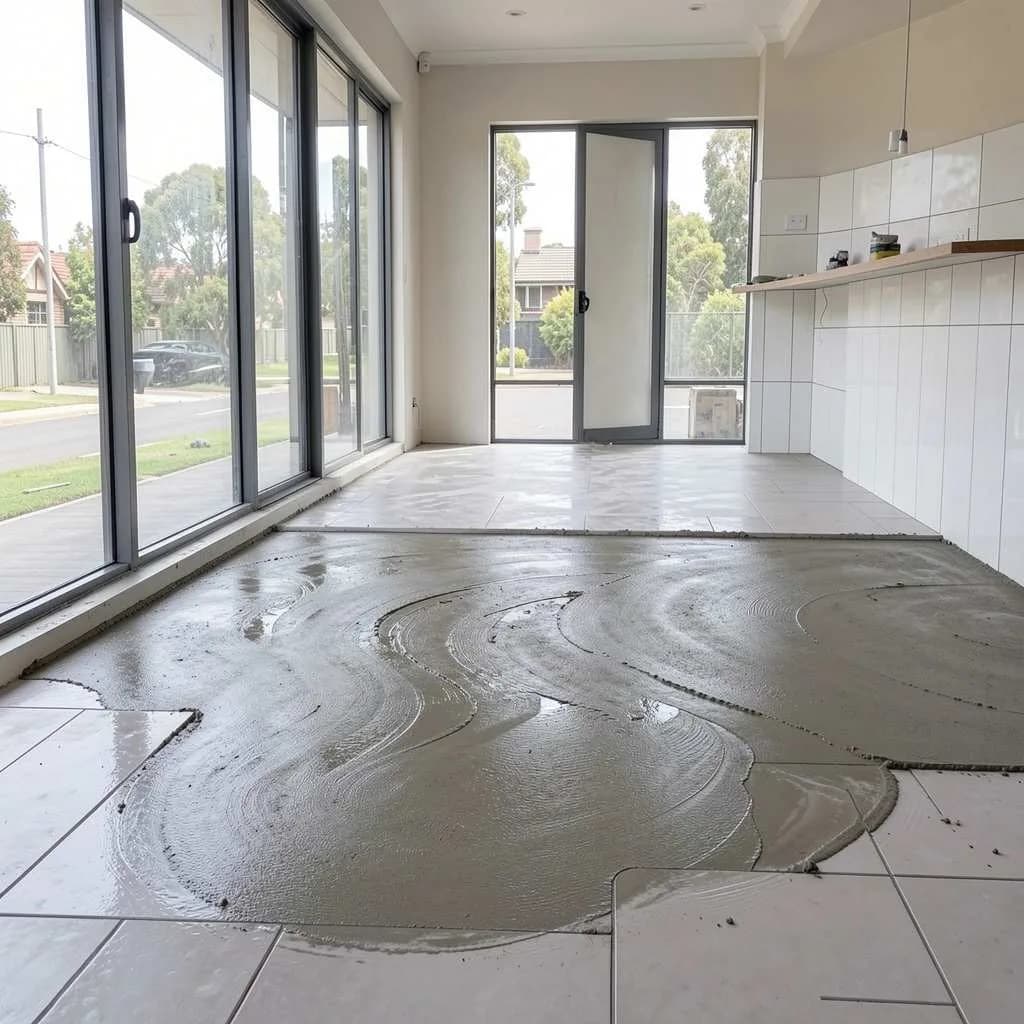
Screeding creates a flat, level surface for tiling and is one of the most important and most overlooked steps in a durable tile installation. Uneven or poorly prepared subfloors are the leading cause of cracked grout, hollow tiles, and lippage. Below is current Melbourne pricing across the main screed types used in residential and commercial tiling projects.
Different screed types suit different situations: traditional sand and cement screed is cost-effective for standard floors, while self-levelling and rapid-set screeds are used where a very flat finish is needed quickly, such as ahead of large-format tile installation. Bonded screed is applied directly to the concrete slab, while unbonded and floating screeds include a separation layer – floating screed in particular is used where underfloor heating, insulation, or sound isolation is required. Choosing the right screed type for your subfloor and tile selection has a direct impact on the long-term performance of the finished floor.
Screeding Prices
| Service | Price |
|---|---|
| Sand & Cement Screed | $25–$45/m² |
| Traditional Screed | $30–$45/m² |
| Self-Levelling Screed | $30–$50/m² |
| Rapid Set Screed | $35–$60/m² |
| Bonded Screed | $30–$50/m² |
| Unbonded Screed | $35–$55/m² |
| Floating Screed | $40–$70/m² |
What Affects Screeding Prices in Melbourne?
Screeding costs are affected by:
- Total floor area requiring a level screed layer
- Screed type – traditional, self-levelling, rapid-set, bonded, unbonded, or floating
- Thickness of screed required to correct an uneven or sloping subfloor
- Whether underfloor heating or insulation is incorporated beneath the screed
- Drying and curing time required before tiling can commence
- Access to the property for mixing and pumping equipment
- Whether the screed is for a residential floor or a larger commercial area
- Subfloor type – concrete slab, timber, or existing tile substrate
Our Screeding Process
- 1. Subfloor assessment – We check levels across the floor and identify the right screed type for your subfloor and tile choice.
- 2. Fixed quote – You receive a price based on screed type, thickness, and total floor area.
- 3. Screed application – The screed is mixed and applied to create a flat, stable surface, with falls built in where drainage is required.
- 4. Curing before tiling – The screed is left to cure fully before tiling begins, ensuring long-term stability.
Why Choose Alistar Tiling Melbourne
Alistar Tiling Melbourne applies sand and cement, self-levelling, rapid-set, bonded, unbonded, and floating screeds as part of floor tiling projects across Melbourne. Getting the screed right is the foundation of a long-lasting tiled floor, and our team assesses subfloor levels carefully before recommending the most appropriate screed system for your project and timeline. We also work with underfloor heating installers where floating screeds are required, ensuring the heating system is properly encased and performing before tiles are laid on top.
Melbourne Suburbs We Service
We provide screeding services across greater Melbourne as part of floor tiling and renovation projects, from period homes in Melbourne's inner suburbs needing subfloor correction, to new builds in outer growth areas requiring screed ahead of large-format tile installation. Screeding a wet area? See our bathroom tiling prices Melbourne guide, or our waterproofing prices Melbourne guide if a membrane is required above the screed. Retiling over old flooring first? See our tile removal prices Melbourne guide. Browse our full range of tiling services. Contact us for a free on-site screeding assessment anywhere across Melbourne.
FAQs
Frequently Asked Questions
01What is the cheapest type of screed?
02How long does screed need to cure before tiling?
03What is floating screed used for?
04Do I need screed if my floor already looks flat?
05Is self-leveling screed better than traditional screed?
06Can screeding fix a sloping or uneven floor?
07Do you screed commercial floors as well as residential?
08Can screed be applied over old tiles or does it need bare concrete?
09How thick does a screed layer need to be?
10Does screeding add significant height to my floor?
11Can screeding be done in small areas like a shower base?
Get a Free Screeding Quote in Melbourne
Contact Alistar Tiling Melbourne for a free on-site assessment and fixed quote for screeding ahead of your next floor tiling project.