
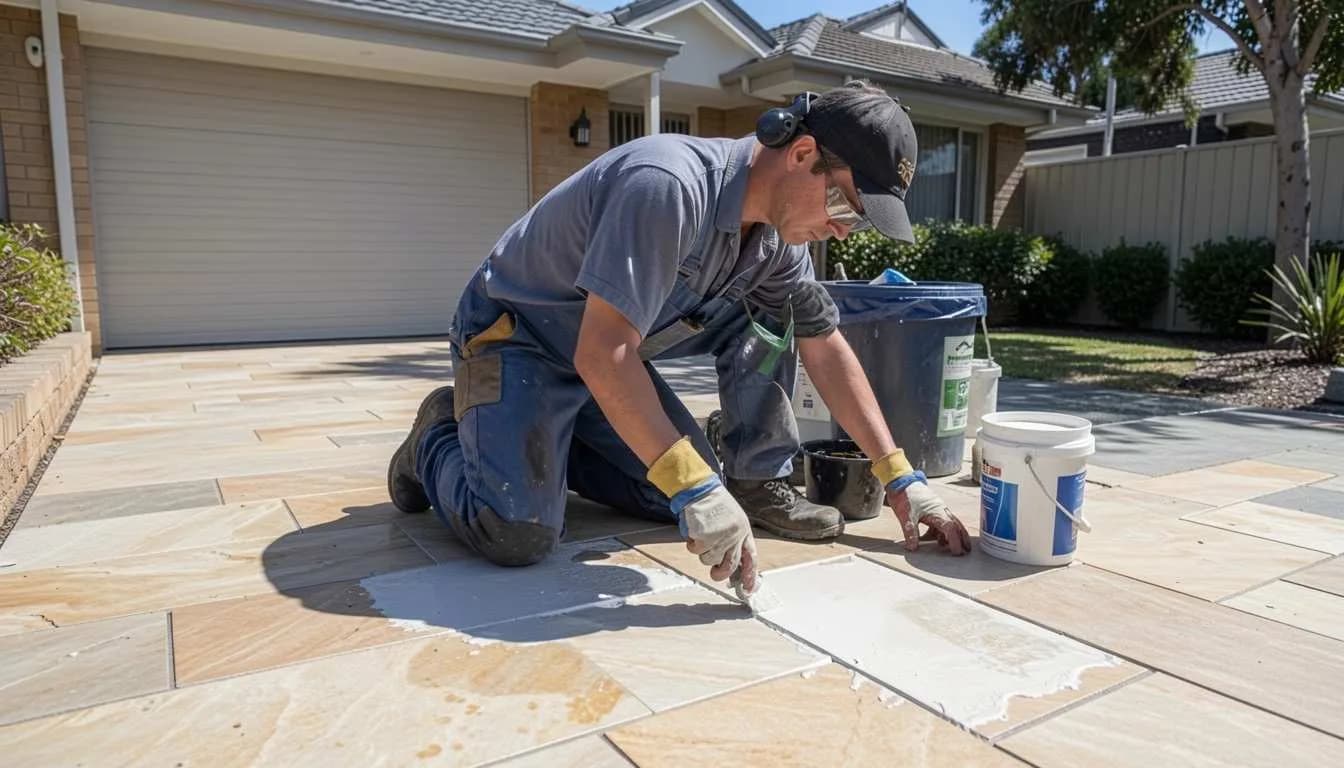
Natural stone tiles are porous and need to be sealed to protect against staining, water absorption, and general wear. Below is current Melbourne pricing for sealing the most common natural stone tile types used in homes and commercial properties.
Unlike ceramic and porcelain, natural stone tiles have a porous structure that allows liquids to penetrate the surface if left unsealed, leading to staining, discoloration, and in some cases, structural weakening over time. Sealing forms a protective barrier that keeps stone tiles looking their best and makes everyday cleaning far easier. Different stone types absorb sealant differently – softer, more porous stones like limestone and travertine often need more frequent resealing than denser stones like granite and bluestone floors.
Tile Sealing Prices
| Tile Type | Price |
|---|---|
| Marble | $15–$25/m² |
| Granite | $12–$22/m² |
| Travertine | $15–$25/m² |
| Limestone | $15–$25/m² |
| Slate | $12–$22/m² |
| Bluestone | $12–$22/m² |
| Terrazzo | $15–$25/m² |
What Affects Tile Sealing Prices in Melbourne?
Tile sealing costs depend on:
- Stone type and its natural porosity
- Total area of stone tiling being sealed
- Whether this is an initial seal on new tiles or a re-seal on existing tiles
- Condition of the stone and whether staining needs treatment before sealing
- Number of coats required for adequate protection
- Indoor versus outdoor application and exposure to weather
- Accessibility of the area being sealed
- Sealant type – topical or penetrating impregnating sealer
Our Tile Sealing Process
- 1. On-site assessment – We check the stone type, porosity, and condition to recommend the right sealant.
- 2. Fixed quote – You receive a price based on stone type, area, and number of coats required.
- 3. Surface preparation – The stone is cleaned thoroughly to remove dirt, grime, or old sealant residue.
- 4. Sealant application – Sealant is applied evenly and left to cure fully before the area is used.
Why Choose Alistar Tiling Melbourne
Alistar Tiling Melbourne seals marble, granite, travertine, limestone, slate, bluestone, and terrazzo tiles across Melbourne homes and commercial properties, protecting natural stone surfaces from staining and wear. We assess each stone's porosity on-site and recommend the appropriate sealant and number of coats for lasting protection, whether it's a newly installed floor or an older stone surface due for resealing. Sealing is also commonly carried out alongside our tile polishing service for a complete natural stone refresh.
Stone floor looking dull rather than stained? See our tile polishing prices Melbourne guide to restore shine before sealing.
Grout around the stone due for a refresh too? See our grout cleaning prices Melbourne guide before sealing.
Still choosing your natural stone? See our tile supply prices Melbourne guide for material costs by stone type.
Melbourne Suburbs We Service
We provide natural stone tile sealing services across greater Melbourne, from marble and travertine floors in period homes across the inner and eastern suburbs to bluestone pavers and outdoor entertaining areas in properties throughout Melbourne's bayside and southeastern regions. Contact us for a free on-site quote to seal your natural stone tiles.
FAQs
Frequently Asked Questions
01How often should natural stone tiles be resealed?
02Do all natural stone tiles need sealing?
03Can sealing fix existing stains on natural stone?
04Is outdoor stone sealing different to indoor sealing?
05How long does sealant take to cure?
06Can I seal my own stone tiles, or should I use a professional?
07Does sealing make natural stone tiles less slippery?
08What's the difference between a topical and impregnating sealer?
09Can sealing be done as part of a new tile installation?
10Will sealing change the colour or appearance of my stone tiles?
11Can sealing be applied to grout as well as tiles?
Get a Free Tile Sealing Quote in Melbourne
Contact Alistar Tiling Melbourne for a free on-site quote to seal or reseal your natural stone floors, walls, or outdoor areas.