
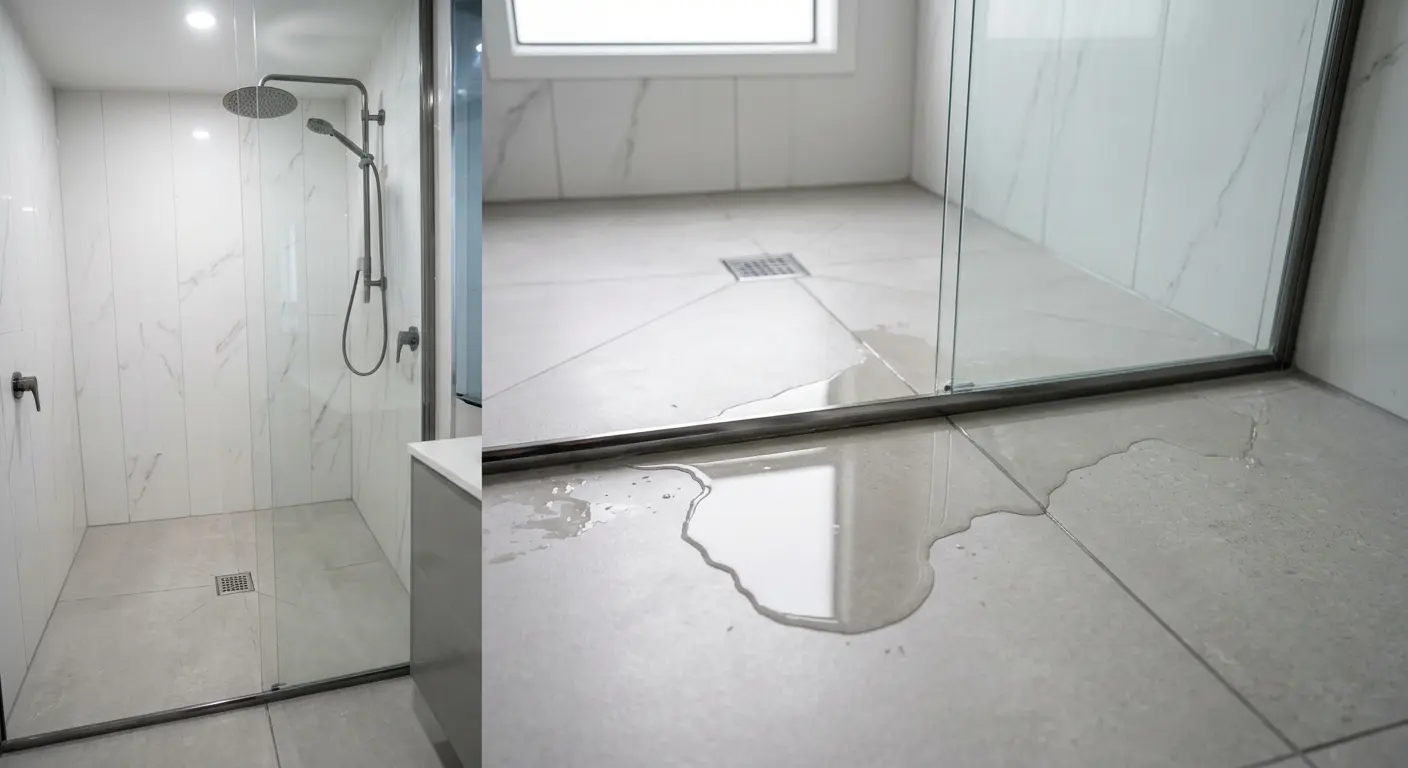
After a shower, there should be no water remaining on the floor, which is a sign that the shower is new. While blocked waste is a common issue, if you've noticed that your shower isn't draining, water is gathering in one corner, or your drain is draining slowly, the problem may be more than a blocked waste. An important part of drainage is how the floor of the shower is tiled and sloped toward the drain. Water can pool or remain where it is not supposed to because of an improper/incorrect shower floor slope, a low area in the finished floor, or issues with the tile installation. For Melbourne homeowners, a cause can be detected early to prevent a troublesome new bathroom issue from becoming a bigger fix.
A Melbourne client's new shower problem
A recent bathroom remodeller in Melbourne contacted us when they saw that the water was still standing near the shower screen in their new bathroom on a regular basis. Although her new tiles appeared great, it was discovered that a small section of the floor would be damp after each shower compared to the rest of her floor. At first, she thought, because the water seemed to get sucked down and into her shower while the blockage was taking place, that she had a problem with her shower drain. The critical data that we noted when we reviewed an area that has tiled flooring is the area to which water is pooling. It wasn't just a matter of the clarity of the grate. The finish floor fall was recommended for closer inspection, as it was the only one with a pooling pattern. Drained again to the roof of the hut and to the floor tiles, and offered to replace the recommended part of the drainage issue separately and to have a look at the other part of the drainage. This would enable the homeowner to address the dilemma in a systematic fashion without taking the plunge to assume the entire shower is to be replaced. It was a valuable lesson, in fact: The position and activity of the excess water was a lot of information when a new shower is accumulating water.
Why is my shower not draining properly?
The first question with a new shower that does not drain is whether or not it is the drain or the tiled floor. A clog in the drain can form and be visible to the eye, which can limit water flow. Hair, soap scum, construction debris, and other material can impact your drainage. If, however, the waste is clear, but the water persists to pool in a specific part of the shower floor, it's time to look at the shower floor. Any shower floor should be properly finished, letting surface water go towards the waste. When the fall is not adequate, or the flow of it is either uneven or improperly directed, water may flow slowly, or may not flow at all. This is especially marked if the same spot on the floor is wet following every shower.
Could the shower floor slope be causing the pooling?
Yes. An important part of the well-functioning tiled shower is the slope of the shower floor. Tiles are waterproof and won't drain water. They are themselves the restriction that helps to form the final surface over a prepared substrate that should direct the water flow to the waste. Even if the drain is totally clear, water can be trapped if there is a low point or irregular fall. Taking out the part of the showerhead that blocks water from the grills to the rest of the showerhead may only fix the problem in case of shower pooling water. A qualified tiler can inspect the completed surface and see how water flows over it, seeing patterns that could suggest that there is a floor-fall or fitting problem.
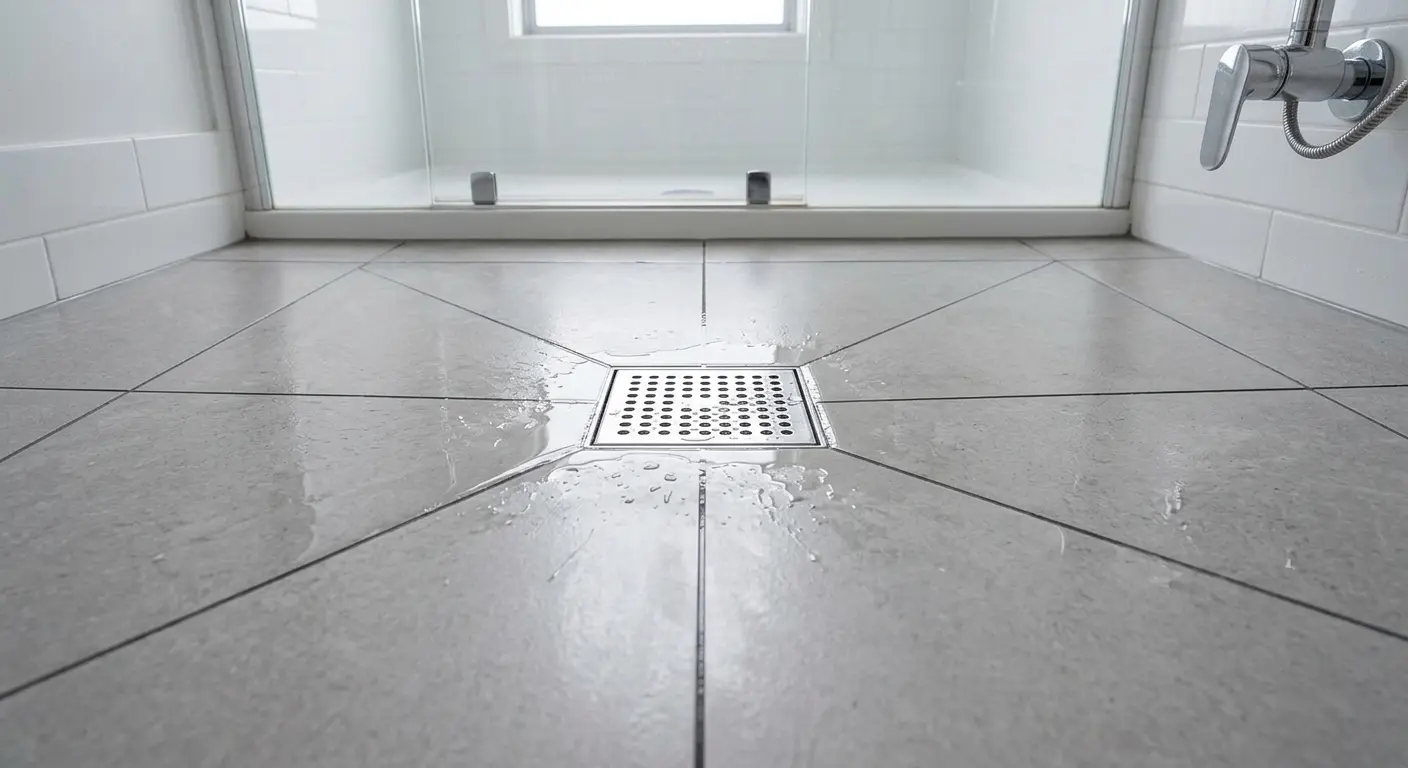
Why does my shower drain not draining when the bathroom is brand new?
Some of the following factors could cause a drainage issue with a new shower. Not only might water performance on a finished floor be affected by problems with the waste or pipework, but it may need to be inspected as well. In such a case, for instance, if the water always flows away from the waste and into a specific area, this can give a helpful indicator of the floor fall. Likewise, if water is not in the center of the field or house, but at an edge of the field or corner of the house, the water might be due to a low spot in that particular location. That is why a new shower should not automatically be deemed to be a blockage, as it is. At Alistar Tiling Melbourne, our focus is on the tiled aspect of the problem it's all about the tiles, grout, finished surface, and fall of the visible floor. If a plumbing problem is suspected, a qualified and/or licensed plumbing professional should evaluate drainage components.
What does a tiler look for when water pools in a shower?
A tiler may also consider the final appearance of a shower, which shows where water is swept on a daily basis if the shower has pooling water problems. It's especially helpful to know the area where the pools are. When water invariably accumulates in the same spot, it can mean that there is an uneven part of the fall or not enough fall. The layout of the tile, grout lines, waste location (e.g., tile perimeter), and other perimeter surfaces can also indicate possible installation issues. A shower is more than just the tiles of the shower at Alistar Tiling Melbourne. The completed setup should be aesthetically pleasing and work well.
How can I tell if my shower has a tiling or floor-fall problem?
It is unwise to assume anything on the basis of visual evidence. A perfectly flat, lookalike shower floor may have drainage characteristics that would benefit from being investigated. Monitor use during normal use. When water continuously flows towards the waste and vanishes, then its surface is typical for the purpose. If water consistently moves into low-lying areas and stays there, additional investigation might be necessary.
Some useful observations include:
- Where is the collected water stored?
- Does the same area remain drenched whenever showered?
- Does water flow towards the drain?
- Can the grate be seen to be blocked?
- What was the first use of the problem, and was it problematic?
These observations can guide a tiler towards better understanding the problem in order to make a better recommendation prior to any tiler being recommended to be applied.
Can a tiler fix a shower that is not draining?
This is determined by the cause of the issue. If the problem is due to the tiled surface, fall, or tiling, a skilled tiler might be able to suggest appropriate corrective work. This may be caused by a localized issue, or perhaps a more extensive issue that requires retiling. But if there is a problem within the waste or the drainage pipework, that's a plumbing problem and needs to be checked out by a licensed plumber. At Alistar Tiling Melbourne, our role is to assess the tiling side of the problem honestly. We do not recommend unnecessary tile work when the evidence points elsewhere.
When should Melbourne homeowners call Alistar Tiling Melbourne?
If water is still accumulating on the tile, especially if it doesn't look dirty in the drain, you should have it checked out by a professional team who specialize in handling shower problems. This is particularly important if water is always trapped in the same spot, if the shower floor seems to be different from what it should be, or if you think that the shower itself is an issue. Alistar Tiling Melbourne will be able to examine the damaged top, grout, and floor fall and determine if the issues seem to be associated with the tiling put in. If another trade needs to dig into the drainage system, we will be able to give them an explanation for that distinction, rather than guessing.
Final takeaway
If the shower doesn't drain, it doesn't mean it has a blockage. If the brand new shower is experiencing shower water pooling over and over again, the final shower tile surface and shower floor slope also should be taken into account. Alistar Tiling Melbourne generally assesses the problem by visiting the site and examining the existing tiling, grout, and floor fall to determine whether the issue relates to the tiling installation. If you're in Melbourne, and have a new shower that isn't working as expected, it's vital not to "fix" it unnecessarily and end up spending too much if you don't have the issue assessed early to get the right solution.
Got a shower that won't drain properly in Melbourne? Call Ali Star Tiling on 0455 233 816 or email info@alistartilingmelbourne.com.au. We assess shower floor falls and tiling across Melbourne's western and northern suburbs. Free site assessments, written quotes. Mon-Sat 7am-6pm.