
After a rain shower, it's common to see wet spots. However, if water continues to collect in the same areas long after the rain stops, or if it pools around and adjacent to the house, there may be a problem. Rainwater pooling on the patio can indicate issues with the falls, poor drainage, a flawed tile pattern, or a problem below the floor. Early detection can help prevent more expensive repairs later.
Examples of Melbourne client success stories.
The house owner Seleca in Melbourne's eastern suburbs spots a puddle after the last rain, in the middle of a tiled entertaining patio. At first, they usually direct the water towards the garden, assuming it's just too much rain. In the same area 2 or 3 weeks later, it still stays wet much longer than the rest of the patio. A shallow low area and one of the local drains are obstructed by garden debris in an assessment. Cleaning the debris helps, but the sink will also need the dip repaired to allow water to flow toward the drainage point.
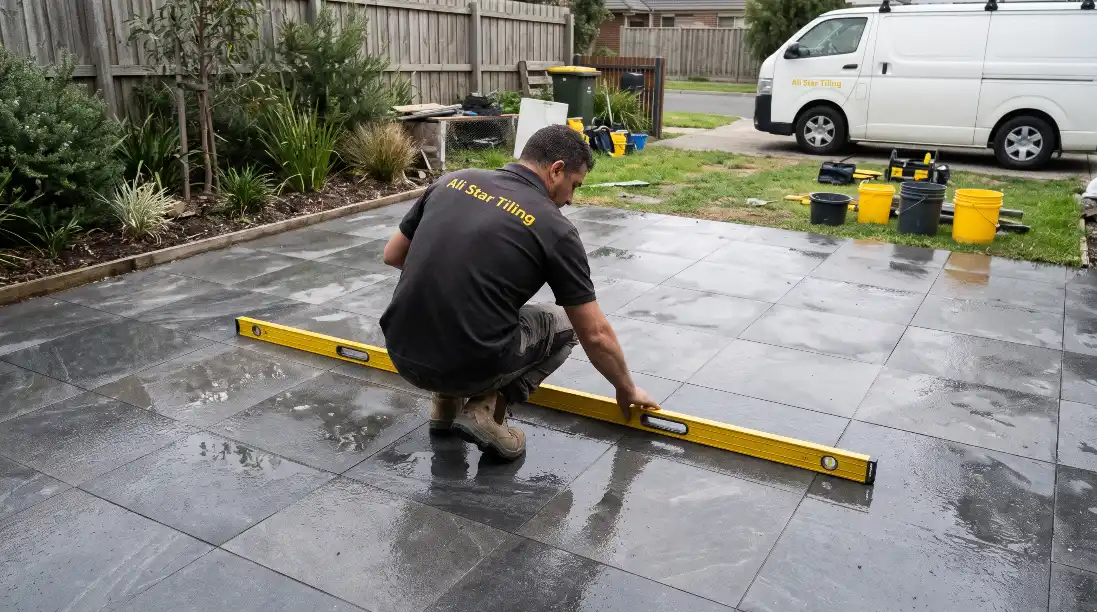
What is Water Pooling on My Tiled Patio?
Outdoor tiles should be designed to direct rainwater to a proper drainage or runoff area. When puddles occur in the same area more than once, the surface may not be directing water flow correctly. This may be due to the tile installation, neighboring levels or the drainage path.
The Tiles May Have an Incorrect Fall
One of the most frequent causes of water remaining on a patio is missteps when walking on outdoor patio tiles. A gently inclined surface that directs water toward a drainage or appropriate collection point is called “fall.” Rainwater may pool when a surface is flat, slopes in the wrong direction, or has uneven areas. The problem could be installation-related or an ongoing issue. Adding more grout or coating won't fix an improper slope that funnels water into a low area.
Patio Tiles Are Not Draining Properly
If the patio tile problem is related to poor drainage, the issue may be outside the tile surface. Leaves, soil and garden waste can clog channel drains and/or outdoor grates. A subsidized or poorly positioned drain can also struggle during heavy rain. Clear away easily accessible grates and determine if water can flow unhindered from any grates to the drainage point. A drainage expert may be needed to examine the drain and its capacity if the drains appear clear, but water still backs up.
Low Spots, Uneven Tiles or Movement
Construction beneath the tile can settle, forming puddles that rainwater can fill. Tiles can also loosen or cracks can occur in the joints between the tiles. Look for a wavy surface, such as tile ridges, puddles, floating grout, or loose tile edges. The above signs indicate that a surface inspection is necessary. A single tile may need to be replaced, or wider settlement may necessitate adjusting the base and fall.
Water May Be Running Towards the House
One of the more serious outdoor patio drainage issues is when drainage flows toward an exterior wall, a sliding door, and/or a doorway. This can happen if the patio slopes incorrectly, the drain is plugged, or the patio is located above the building. Keep an eye out for slow water flow, damp spots on walls, or water leaking in through doors. Applying more silicone or grout won't redirect water properly or repair a damaged drainpipe. If you notice water getting inside, arrange for an inspection as soon as possible.
Before and After: What a Proper Repair Can Change
The repair should fix the underlying reason water is collecting in one spot, rather than just covering up the puddle.
| Before repair | After appropriate repair |
|---|---|
| Puddles repeatedly form in low spots. | The surface is adjusted where needed to help water flow towards the drain. |
| Debris blocks water from entering the drain | Accessible drains are cleaned and checked to ensure proper water flow. |
| Loose tiles or cracked joints indicate possible movement. | Damaged areas are repaired, and any underlying movement is checked. |
| Water collects near doors or exterior walls. | Water flow is redirected, and possible water entry points are inspected. |
| Temporary repairs keep failing because the cause is unclear | Repairs are chosen after checking the surface slope and drainage system. |
The results may vary depending on the condition of the site and whether any extra repairs or work are needed.
Things To Check Before Calling in the Professional.
- After rainfall, record puddle locations, how long they last, and whether they move toward the house.
- Remove loose leaves and other debris from easy-to-clean drain grates.
- Investigate why puddles don't drain after various rain events.
- Watch for cracks in the grout, loose tiles, and/or dips.
- Mark places where water is pooling around patio edges, around doors/near walls.
- After the rain, take photographs and display them for the contractor
- Do not make holes in tiles or put on a coating until the cause is understood. Subsequent problems can occur from either step if they affect the tile system, waterproofing, or the intended water path.
How Is a Water-Pooling Patio Fixed?
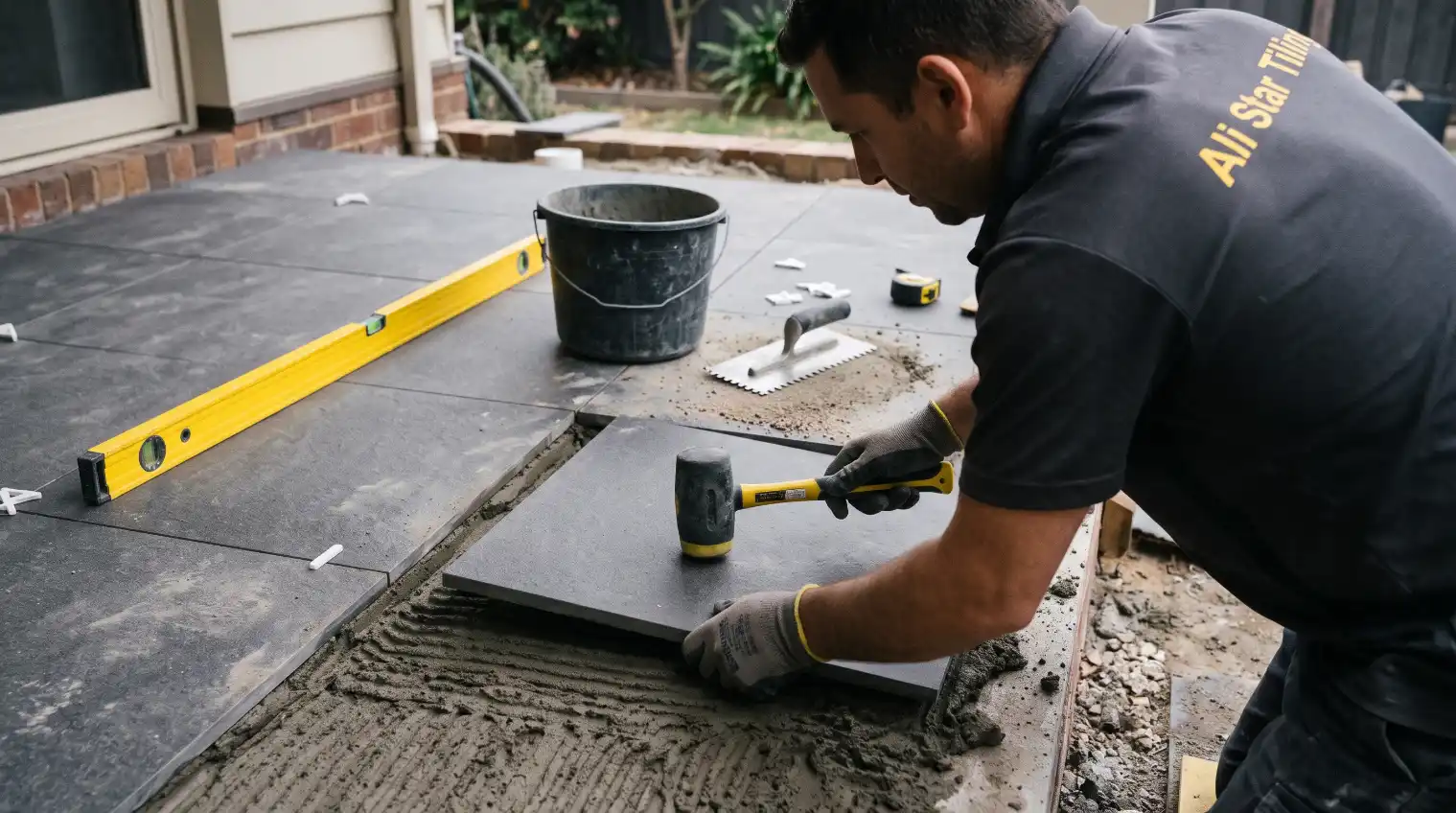
The repair should be proportionate to the cause. A blocked grate may cause a simple blockage and can be fixed by clearing it. A localized defect may only require replacing tiles, while extensive water pooling on tiled patios may require lifting out tiles, correcting the base, or restoring the fall. Removal or lack of capacity (outlet) may require drainage specialist. A tiler can evaluate tiles, levels, and tile installation information. Water may be entering the house, or the drainage may be unclear, so a drainage specialist may also be required. A range of repair options for Melbourne properties is available and depends on the site. If water is reaching the room below, see why a tiled balcony leaks.
Final Takeaway
If leaks and puddles persist on the patio after rain, it's worth investigating. The cause may be a blocked drain, improper fall on outside tiles, uneven bedding, or water flowing from the ground toward your house. Start with safe visual inspections, document areas where water collects, and avoid a "quick fix" that covers up the symptom. Based on a careful evaluation, you can determine whether it's a maintenance issue, a tile repair, or a slope or drainage system correction and whether your patio shed drains better in Melbourne.
FAQs