
Use a soft microfibre mop, clean water, and a pH-neutral tile cleaner appropriate for the tile type to clean newly installed tiles. Don't use harsh chemicals, abrasive pads, or excessive water until the grout and adhesive have cured as the manufacturer directs. If a cloudy film persists, it may actually be “grout haze” rather than just dirt and will need a special cleaning method. New Melbourne tiles should be cleaned correctly to avoid tarnishing, ensure the grout stays clean, and maximize the look of a new installation.
A Melbourne Client Story: When a Cloudy Floor Wasn't Dirt
Minhaj had just gone so far as to redecorate his kitchen in Melbourne's eastern suburbs. He tiled and then re-moped the new floor, but it turned cloudy. He thought they must be the wrong ones, so he added extra household detergent, and the streaks became more apparent. During the hypothetical reinspection, the tiler found two possible sources for the tiling issues: cleaning-product residue and tile grout haze. Minhaj decided not to use extra detergent and let the installation reach the right curing stage. Assessment of the surface was then made, and a suitable cleaning method was chosen to meet the grout and porcelain specifications. The floor looked better after careful cleaning and residue removal. In this example, you may have noticed the importance of picking up residue before choosing a chemical. Not every scrubbing or stronger product is the answer.
Why Cleaning New Tiles Requires Special Care
Construction dust, adhesive residue, or grout haze can cause dull-looking new tile installations. But over-cleaning can damage the tile before even the most fully cured wall has been repaired. Acidic products can harm sensitive stone, and abrasive scrubbers can scratch polished surfaces. Excess water can also affect uncured grout and may damage certain products. Before choosing a cleaning method, check the tile and grout material, type, and date. Not all products are effective for porcelain, ceramic, and natural stone. Always follow the tile, grout, and cleaner manufacturers' instructions.
New Tile Cleaning Guide: Identify the Problem First
Before cleaning newly installed tiles, take a close look at the surface to see what needs to be cleaned. Since different stains and residues require different cleaning methods, using the wrong product could damage the tile finish or grout.
| What You Notice | Possible Cause | Recommended First Step |
|---|---|---|
| Fine dust across the surface | Construction dust or loose debris | Sweep or vacuum gently before using water. |
| White or cloudy film after grouting | Possible grout haze | Check the grout type and manufacturer's cleaning instructions before using a haze remover. |
| Streaks after mopping | Detergent residue, dirty water, or uneven drying | Check the cleaner's dilution instructions and try fresh water if the grout is ready for cleaning. |
| Dull patches on polished tiles | Residue, water marks, or possible surface damage | Inspect the area carefully before applying another cleaning product. |
| Persistent marks on natural stone | Residue or a reaction to an unsuitable product | Avoid acidic cleaners and consult a stone-care specialist or experienced tiler. |
| Sticky or smeared residue | Possible adhesive or grout residue | Identify the product involved before selecting a compatible remover. |
Cleaning step by step new tiles.
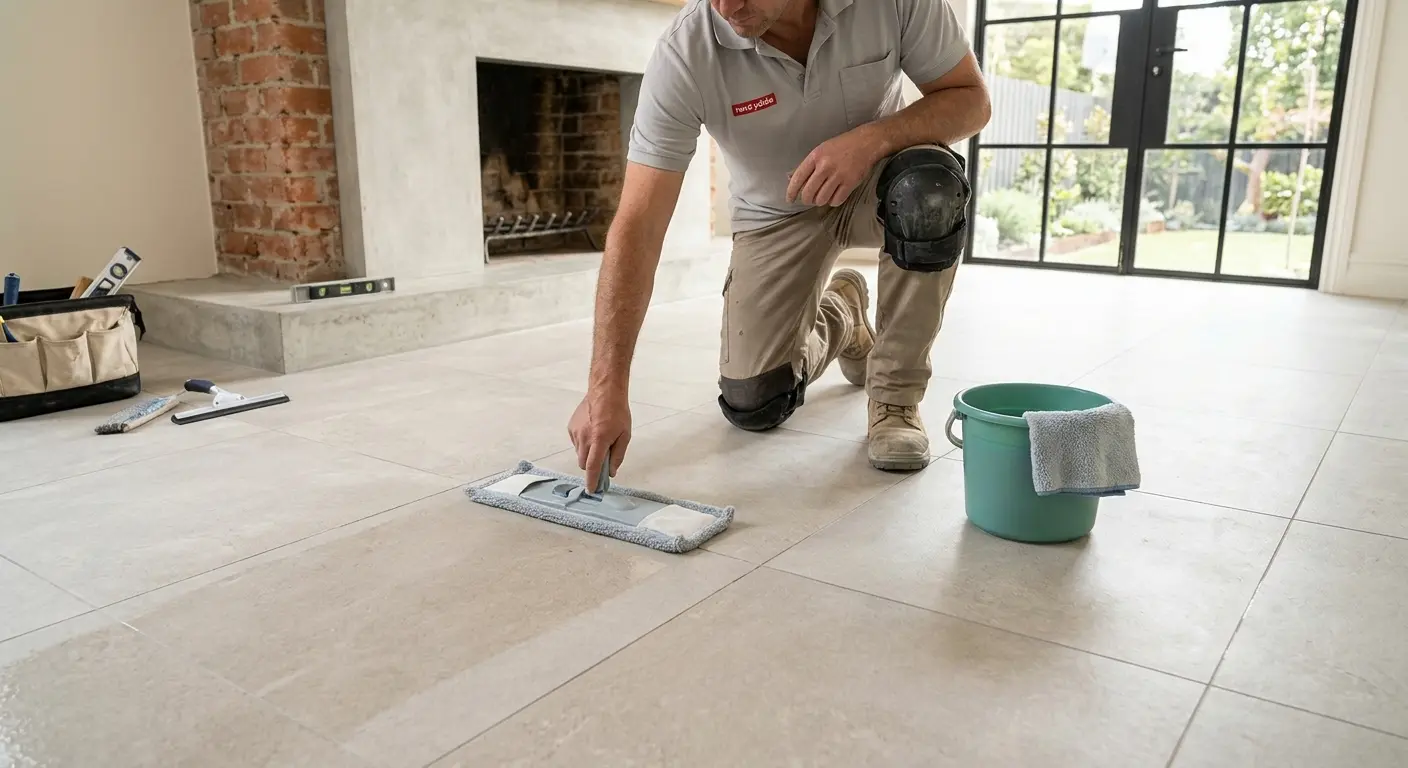
When choosing a cleaning method, use the least aggressive option for new tiles. Allow enough curing time first, especially for newly cured floors, showers, and splashbacks. The appropriate waiting time will depend on the type of product and conditions at the site. Use a soft-bristled broom or a vacuum with a hard floor attachment to remove loose dirt. Then wipe the surface with a well-wrung microfibre mop and clean water, or with a pH-neutral cleaner appropriate for the use. Replace water regularly when it becomes contaminated to prevent spreading it. Rinse, if necessary per product instructions, then dry with a clean mop or cloth. Dirty water should not dry on tiles; work in small sections. This simple process helps eliminate streaks and identify when a stubborn film needs special attention.
What Is the Best Cleaner for Porcelain Tiles?
pH-neutral cleaners approved for porcelain and compatible with grout are most effective for tile cleaning. While porcelain is durable, it can still develop water marks, detergent residue, and streaks, especially in bright lighting. Don't expect better results from stronger chemicals. However, using too much detergent can create a film that holds dirt and makes the floor dirty. Never combine cleaning products, especially bleach with an acidic or ammonia-containing product. Use an untested cleaner on an unobtrusive surface and follow the directions for use. Use a small amount of appropriate cleaner, fresh water, and a soft mop for day-to-day care. You may need a clean microfibre cloth to dry the polished porcelain and achieve a consistent finish.
How to Clean Porcelain Tiles Without Streaks
To clean porcelain tiles without streaks, keep in mind water quality, product dilution, and residue removal. Excessive cleaning, a dirty mop, water, and letting the surface air-dry with detergent build-up are common causes of streaking. Use these practical tips:
- Clean before use by sweeping or vacuuming.
- Strictly follow the cleaner's instructions for mixing the solution.
- Don't reuse dirty water.
- Use a clean microfibre mop, and limit the amount of detergent used.
- Dry clean surfaces when necessary, using a clean, lint-free cloth.
If streaks persist, try washing with fresh water if the tile/grout is ready to be cleaned. Don't reach for acidic chemicals, as it could be grout haze that needs removing, not acid.
Remove Grout Haze From Tiles.
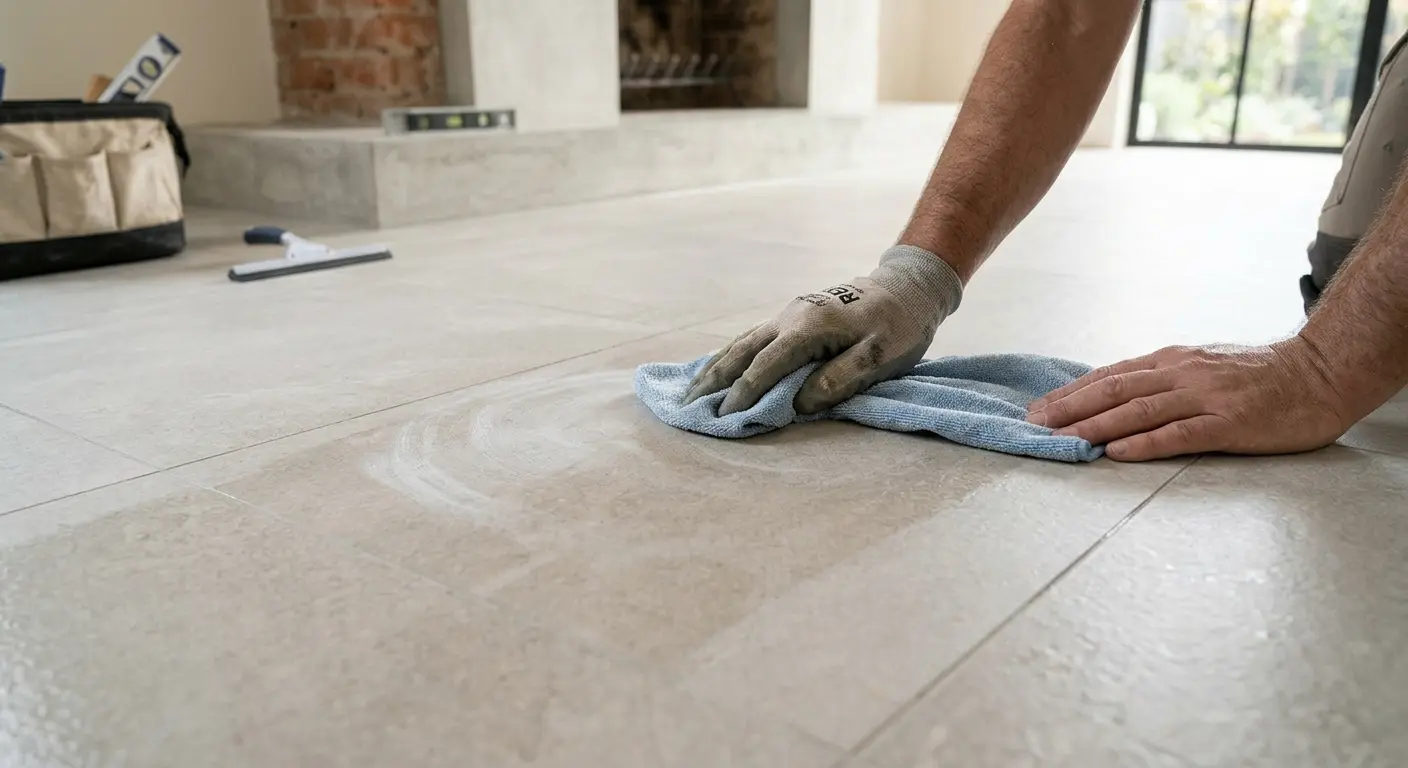
How to clean grout haze off tiles depends on the type used and how long it has been on the tile. Grout haze is a very thin film of cementitious or product-related material left on the tile surface after grouting. It may shine white, look cloudy, or appear dull under light falling on the ground. When using fresh grout, clean up as outlined by the grout manufacturer. If the grout has properly cured and you used the product as specified, you can use a special-purpose haze remover on these compatible, acid-free tiles for cured cement-based grout haze, provided the product can be used safely as directed. Never use or apply an acidic haze remover to natural stone products like marble, limestone, or other semi-permeable stones. Don't use materials on uncured grout, and try in an inconspicuous place. Cleaning epoxy grout residue is a different method to cleaning cement-based grout. Ask your tiler if you have a particular problem with the haze and/or a delicate finish so that they can advise on treatment. Using the wrong product can cause as much apparent harm as the residue itself.
Avoid several mistakes when cleaning Tiles After Installation.
Cleaning tiles after installation means being patient and using the right tools. Don't steam-clean, scrub, or soak newly grouted surfaces unless the product manufacturers specifically recommend it. Never use metal tools to drag over tiles or abrasive powders on the polished finish. Also, don't apply any automatic sealer to porcelain. Most porcelain tiles don't need special treatment, but some grout types, polished porcelain surfaces, and specialized products may require it. Before applying a sealer, read the manufacturer's guidelines. Professional tilers working on Melbourne bathroom installations, kitchens, and laundry can tell you the approximate cure time and recommend cleaning products and maintenance for the installed system.
Final Takeaway
The first step to cleaning new tiles is to be patient, use the right tile cleaner, and understand your tile and grout. Clean gently and regularly; never wash too soon or treat grout haze in any way. If residue remains, consult an expert before using stronger chemicals. If you're a household undertaking renovation work in Melbourne, you can trust a talented tiler's professional advice to maintain the appearance and finish of the new tiles on your wall.
FAQs