
Any difference in the level of a tiled floor will show as "tile lippage" if it can be felt by running a hand along it. The difference in elevation from one tile to another may affect people's appearance and comfort. Some lippage can be present even with a proper installation, but excess lippage can be a problem related to tolerances, preparation of the substrate, layout, or installation process. If Melbourne homeowners know what they should expect, they will find it easier to discuss their concerns with a tiler and determine if there is a problem with the completed finish.
A Melbourne example of a client.
A Melbourne solution provider ‘dawood’ enhanced the bathroom in his northern suburb Melbourne home with a large format porcelain tile renovation job. Once the adhesive dried, he came to understand that he saw different light colors at some edges, which made him think the floor had been installed in an improper way. The grid suggested level variation related to the tile type and existing surface, and a few sites needed to be investigated further in a hypothetical inspection. The size of the relevant areas was measured and compared to the tolerances and requirements of the project, but not by appearance.
What Is Tile Lippage?
When the edges of the adjacent tiles fail to be in the same plane, it is known as tile lippage. One tile is up or down a bit from its neighbor so that there is a noticeable step. It's not similar to the bathroom floor being out of level: A ramp down to a drain may be designed into a bathroom floor and have controlled lippage between the floor tiles and between the new and old floor.
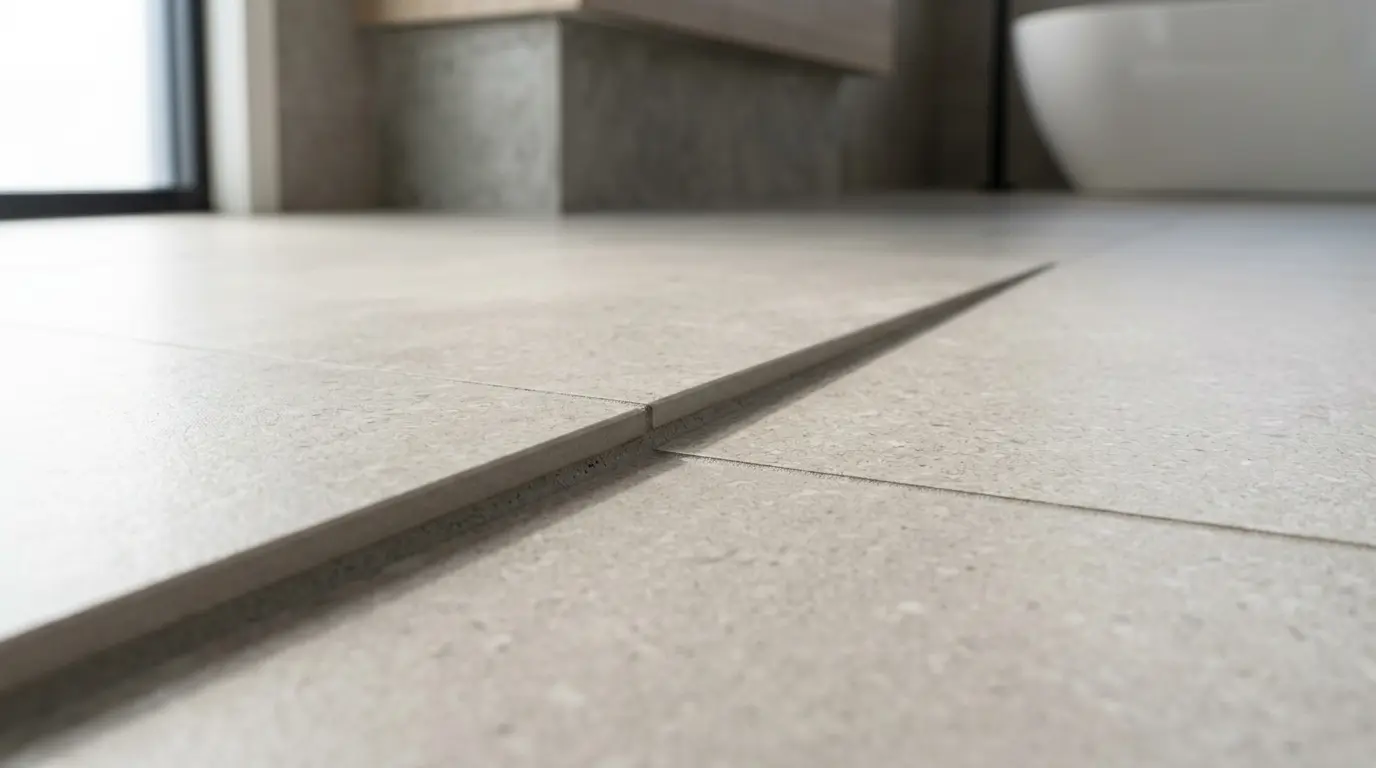
How Much Tile Lippage Is Acceptable?
AS 3958.1:2007 is a commonly referenced standard for ceramic tile installation for use in Australia. It specifies that the lippage between adjacent tiles should not exceed 2 mm. The recommended height is 1.5 mm for tiles whose surface is ground flat up to the first floor, such as polished tiles or tiles laid against metal, wood, or concrete where the top surface is ground flat. The 3 mm recommendation applies to aisles or spaces less than 3 mm wide. So there isn't just one standard for lippage that can be defined as “acceptable” for all tiles. Tile finish and grout-joint width matter, as do the manufacturer's requirements. Australian Standards, if applicable, are usually only voluntary unless they are referenced in a law or other requirement, so the project specs or contractual requirements should also be reviewed. The same applies to flatness: The overall measured flatness is that the finished tiled surface should be flat and true to the required plane within ±4 mm, measured with a straightedge over 2 m. This is not synonymous with measuring the step between two adjacent tiles.
What Causes Uneven Tiles?
There are multiple factors that may cause the lippage. If the substrate (surfacing material) is not flat enough, irregularities can carry over to the surface. Large tiles, in particular, are more difficult and require proper surface preparation. This can be made up of a percentage tolerance set during the manufacture of the tiles. Even quality tiles may exhibit slight thickness variations or flatness issues. The installation technique is also significant, including height differences due to less-than-uniform adhesive application, bedding, incorrect adjustment, or setting-out.
Common contributors include:
- Irregular or inadequate substrate.
- Different sizes, dimensions or bending of tiles.
- Tiles installed over an improper surface in a large format.
- Thin or uneven application of adhesive or improper bedding.
- Unsafe arrangement of falls, drains and turns.
Why Is Lippage More Noticeable with Large Tiles?
If tiles are offset over a distance that is large compared to themselves, a small buffing can make a large difference with an adjacent edge. If the tiles are rectified, this is clearer because they have edges cut in such a way as to allow for very little tolerance between the tile and the adjoining edges (which is ideal for a moderately sized joint). Tiles do not need to be defective if there is visible lippage; different considerations must be taken into account, such as tile tolerances, dilution condition, etc and the specified joint width.
Can Tile Levelling Systems Prevent Lippage?
Tile leveling systems are not a substitute for an appropriate substrate or correct installation technique but can aid in helping the tiles stay level while the adhesive is curing between adjacent tiles. They can't fix an extremely uneven flooring surface underneath.
How Can You Check Tile Lippage?
A straightedge can be used to determine general flatness and an appropriate gauge or measurement can be used to determine the height difference (pro- or anti-flatness) between adjacent edges of tiles. Inspect multiple places and not just the joint that's most obvious. Think about what type of tile, what finish it has, how wide or narrow the joints are, and whether there is a required fall towards the waste. If the new installation is out-of-level, record the areas of interest and consult the installer regarding those areas before making repairs. The removal of tiles can impact other work, waterproofing, or the substrate.
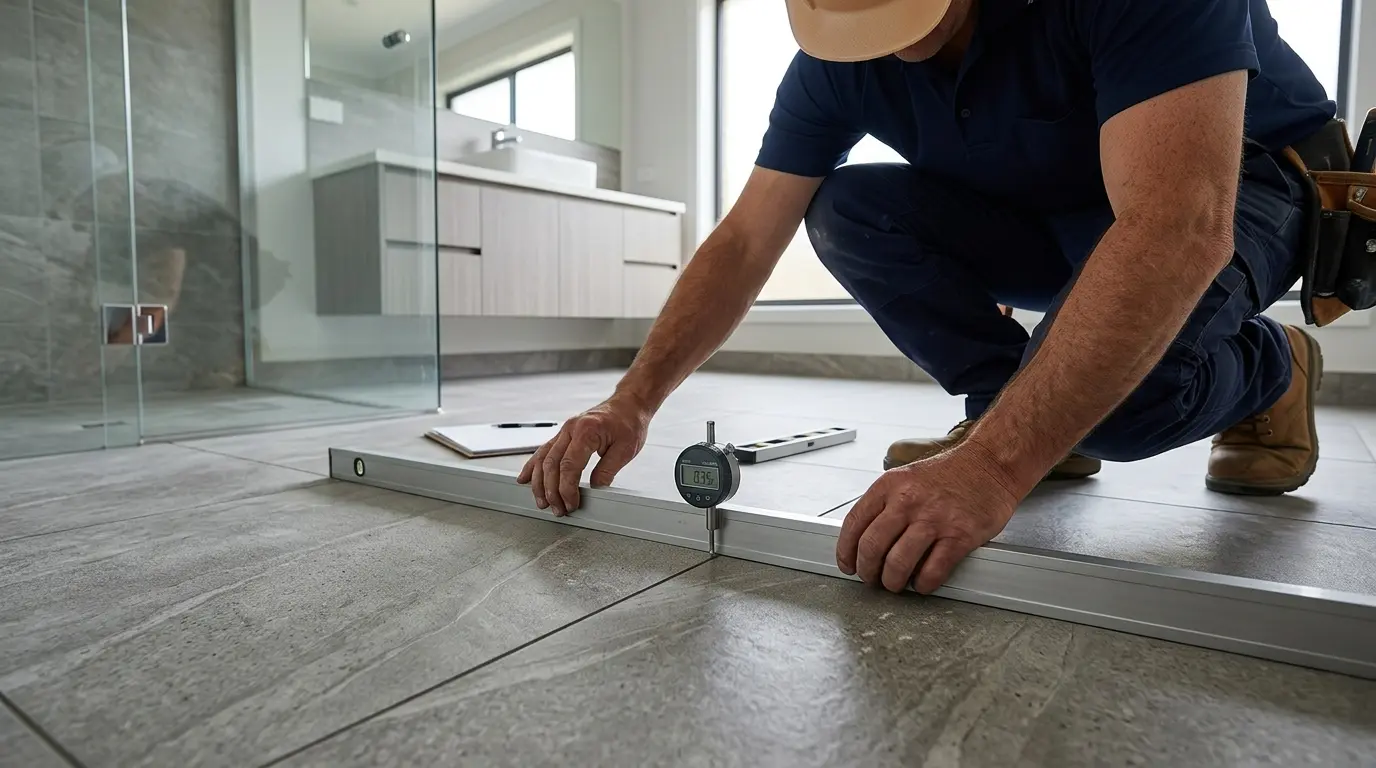
When Is Tile Lippage a Problem?
If it is found to be outside the allowable tolerances, if it could lead to tripping or snagging or cause drainage issues, or if it results in a finish that does not meet the agreed tolerance, any noticeably excessive lippage should be investigated. When you are designing a bathroom, lippage should be taken into account along with falls to the waste and waterproofing. While “perfectly flat” is not the goal for every floor, a proper drain is certainly a must. According to Ali Star Tiling Melbourne, bathroom, wall and floor tiling services include surface preparation, layout, installation, grout, and finishing; these are all undertaken with bathroom and floor tiling across Melbourne.
Final Takeaway
Lippage by itself is not considered a defect. Considerable tolerance may be expected when connecting to tiles and due to the manufacturing method, and may be more than can be tolerated; if the lippage becomes excessive, it has to be investigated. Australian Standard 3958.1:2007 is helpful, recommending a 2 mm spacing between adjacent tiles, more restrictive where appropriate, for the various finishes and narrow tile joints. In a Melbourne home, the real solution is to determine the problem size, understand different tile and joint specifications, and have the tiles expertly evaluated by a tiler prior to repairs. A clean, long-lasting tiled finish relies so heavily on these "rules of the road" for getting a good substrate preparation, careful setting out and proper installation techniques.
FAQs