
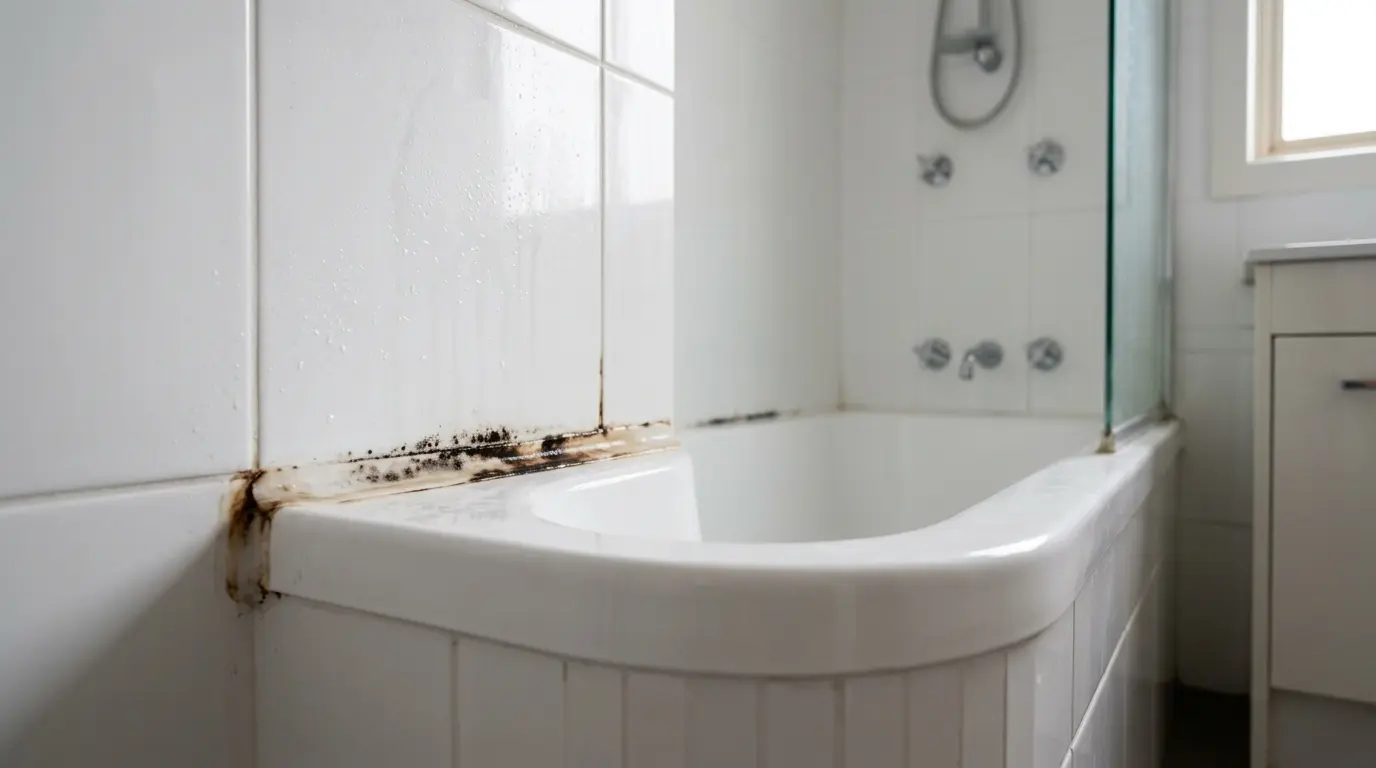
Many people notice black spots around the silicone of their shower, bath, or vanity, months after it's cleaned. One of the most common bathroom maintenance issues with silicone is black mould, caused by warm, moist bathroom conditions that attract moisture and dirt from soap and soap scum. Understanding the cause can help Melbourne homeowners decide whether to clean silicone mould or have it removed and replaced.
An example of a bathroom in Melbourne.
Ruby, though she wiped down the silicone around shower after shower, she saw black marks still forming. At first, she thought that she needed a more powerful mould cleaner. In a simulated inspection situation, moisture and old silicone were detected. The sealant had begun to separate, which left moisture around the joint. It was recommended that the old silicone be removed and then the joint be put back together.
Why Does Bathroom Silicone Turn Black?
Steam, splashes, and condensation are regular occurrences in bathrooms. Mould can develop if silicone joints stay wet for a long time.
Another major factor is insufficient ventilation. The presence of moisture after showers (in a bathroom, e.g.) provides more opportunities for mould to grow. All of the above can be factors and can lead to failure of the exhaust fan, closed bathroom door, wet surfaces, or not enough ventilation. You also should pay attention to the silicone condition. Loose, old, and cracked silicone rubber can create areas where moisture and organic material can pool. Cleaning the visible surface may not solve the underlying problem.
Is Black Mould on Silicone Dangerous?
Fungal growths can be different kinds of black mould to homeowners. Ongoing mould problems don't simply go away and should not be overlooked, especially by anyone who is sensitive or has respiratory issues.
When mould recurs after cleaning, it grows outside the silicone joint, or it's causing water damage, it may be necessary to seek professional inspection for the presence of a moisture issue.
How to Remove Mould from Silicone
Occasionally, cleaning will enhance the surface's visual appeal for small surface growth areas. Always follow directions on cleaning mould products, ventilate the bathroom, and do not combine cleaning chemicals.
Cleaning does not necessarily last. If the sealant has deteriorated and mould can get into this deteriorated sealant, the staining may not go away with cleaning.
These signs suggest that replacement may be more appropriate:
- On thorough cleaning after the disinfection process, black stain remains.
- Silicone is cracked, peeling, falling off, or has separated from the tile.
- Mould problems occur over and over in the same joint.
- The seam line between the bath/shower or between the vanity and the rest of the tub is visible.
- Adjacent to the water ingress area, there is a wet or wet-looking area.
Why Does Mould Keep Coming Back After Cleaning?
Often a stain is treated without trying to deal with any moisture. Mould will grow back if the shower is humid and the joint is wet for hours.During and after showering, use exhaust fans according to the manufacturer's instructions. In areas where possible, keep surfaces dry and remove any standing water. Frequent cleaning may help to minimize soap film residue. See if there is still a seal on the silicone joint. A properly maintained bathroom may still have craggy areas where the sealant leaks.
Why Proper Silicone Application Matters
Silicone is used where movement is expected, since grout can crack at these junctions. This flexibility comes in handy around changes of plane, but the joint must be prepared and properly maintained. When silicone is applied on dirty, damp, or contaminated surfaces, the extent of adhesion may be reduced, which can lead to premature failure of the new seal. If a joint is blackened, examine the surrounding area before replacement. A recurring patch on a corner could indicate condensation or a ventilation problem, and a damp patch out of a shower may warrant a thorough inspection of the wet area construction. There's no magic in replacing silicone that can fix a leaky pipe, a failed fitting, or an underlying waterproofing issue.
When Should You Replace Mouldy Silicone?
If the silicone fails because it's old or embedded with mould, it's time to replace it. Removing the old bead allows inspection and preparation of the joint. If it must be replaced, carefully remove the sealant, inspect the joint, clean it, and dry it before installing sanitary-grade silicone compatible with the silicone already on a Melbourne roof. Don't put the new bead in water until it has cured completely. It is important where there is movement and water, such as shower corners and bath-to-tile interfaces.
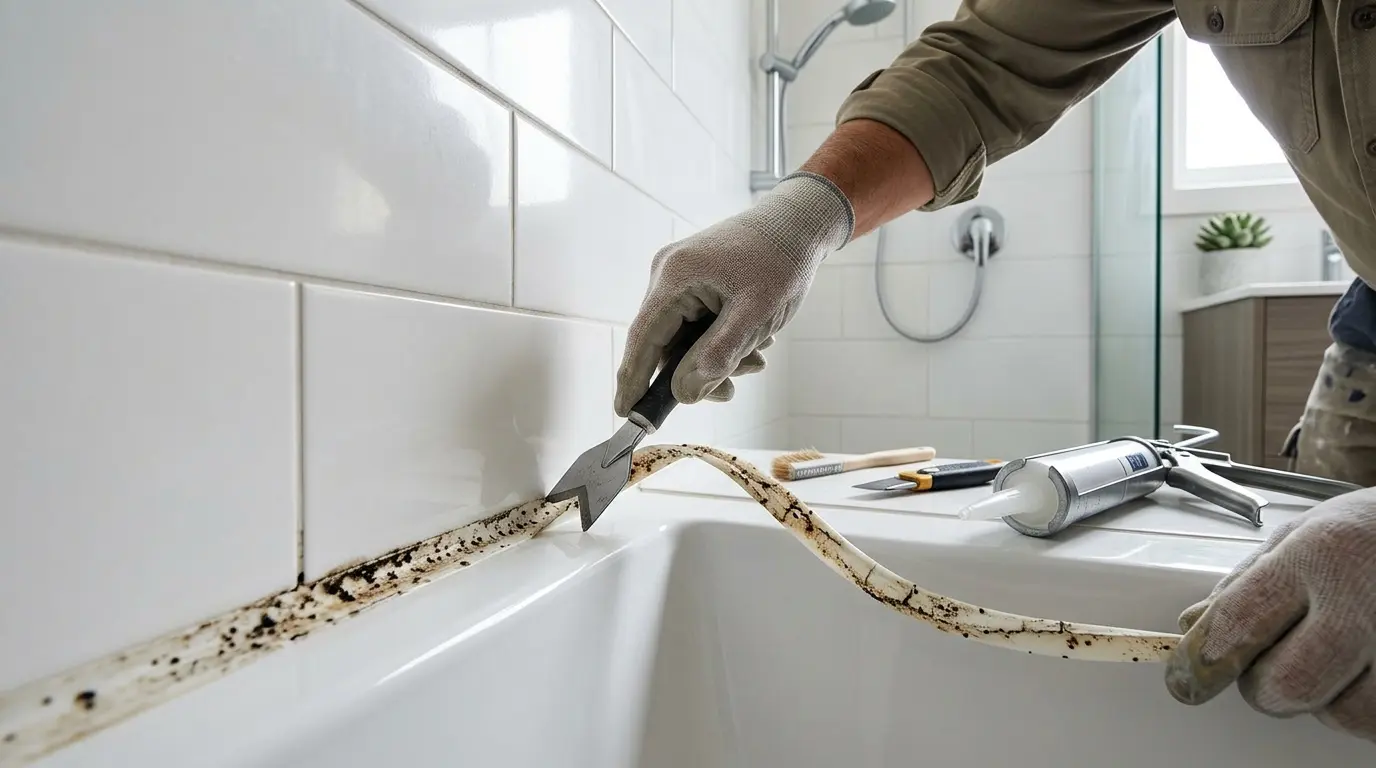
An example of a bathroom in Melbourne.
Think about the fictional client “Sarah”, in the western suburbs of Melbourne. Though she wiped down the silicone around shower after shower, she saw black marks still forming. At first, she thought that she needed a more powerful mould cleaner. In a simulated inspection situation, moisture and old silicone were detected. The sealant had begun to separate, which left moisture around the joint. It was recommended that the old silicone be removed and then the joint be put back together.
This is an example and is not a real success story from a customer who used this service.
Can Bathroom Ventilation Prevent Mouldy Silicone?
Moderate fresh air exchange can minimize the conditions likely to support mould growth; however, it does not eliminate the likelihood of mould developing at all times. Eliminating prolonged humidity can be aided by an effective exhaust fan and by drying judiciously. Keep an eye on condensation and drying rate that follow the usage of the room. If the bathroom is still wet hours after a shower, you should examine the bathroom ventilation and the moisture-management method rather than repeatedly scrubbing your moldy silicone.
Does Black Silicone Always Mean Waterproofing Has Failed?
If black mould is found on silicone, it does NOT prove an underlying failure in the waterproofing membrane under the tiles. Silicone is a layer on the surface of a building, and waterproofing is actually a system that lies behind the tiled surface. If sealant is damaged, it may allow water to get into unwanted areas, and it should not be left in bad shape forever. Older bathrooms that are always wet, stained (past the silicone), have loose tile, or show water damage may need a wider inspection. At Ali Star Tiling Melbourne, “Silicone finishing services and waterproofing are their recommended services for wetrooms, and their public bathroom tiling process encompasses the silicone sealing of wetrooms”. Its waterproofing service claims its wet area work is performed in accordance with AS 3740.
Final Takeaway
Black silicone usually means that moisture, ventilation, cleaning, and sealant conditions can be addressed. Some surface growth may be eliminated with cleaning, but frequent scrubbing will not fix the issue. An improvement in the finish can be achieved by replacing sealant when it is cracked, separated, or regularly stained. The best course of action for Melbourne homeowners is to find out what's causing the moisture leak and repair the problem, not just the black marks.
FAQs