
When cracked tiles are observed, three other signs are very common alongside them — a hollow sound underfoot, loose tiles, or tiles lifting from the floor — but the problem isn't necessarily with the tile itself. It can signal a problem beneath the surface, such as substrate movement, poor preparation, inadequate adhesive coverage, moisture, or installation stress. The cause matters because for Melbourne homeowners, apparent tile failure may signal a more serious issue. Only a professional can check the tile, adhesive bond, substrate, grout, and even the waterproofing in wet rooms before recommending repairs.
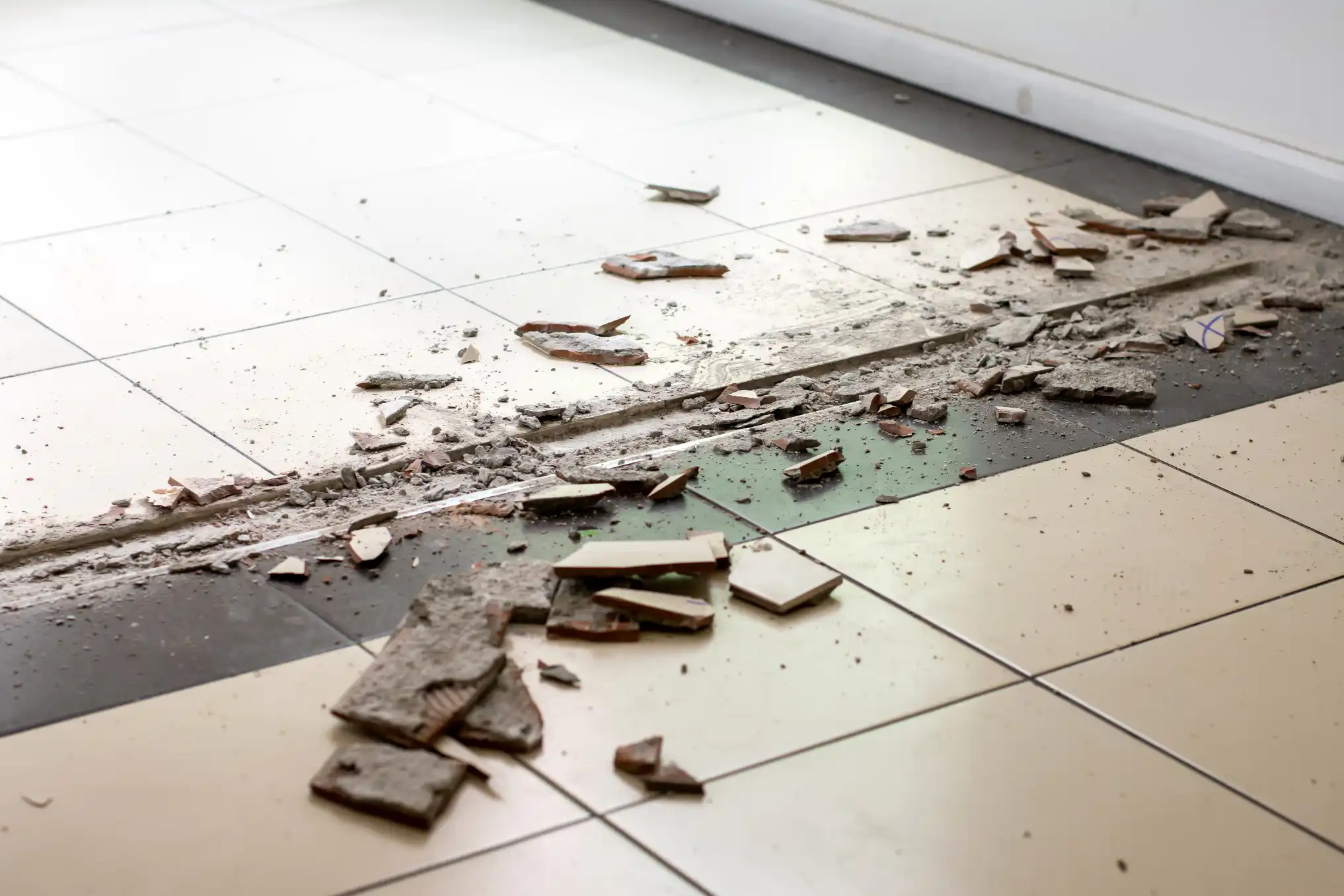
Cracked or lifting tiles can indicate movement, bonding problems or issues beneath the tiled surface.
A Melbourne Client Story: When One Cracked Tile Revealed a Bigger Issue
Ali Star Tiling was called into a homeowner's residence in Melton when the homeowner noticed three broken floor tiles in the kitchen and a hollow sound coming from several surrounding floor tiles. The owner expected a straightforward replacement. The cracks observed during the assessment indicated that the problem was not confined to the visible damage. Inspection of the affected tiles showed that the adhesive had lost contact with parts of the tile under a few of them, and that the surface behind part of the floor was not flat. Rather than simply removing the cracked area and reinstalling new tiles, the entire affected area was prepped properly, the substrate was infilled as needed, and the tiles were installed using the correct adhesive system. The lesson she learned was that the visible crack was just the surface symptom of a deeper problem.
What Causes Cracked Tiles?
Here are some common causes of cracked tiles. One of the most common is movement of the substrate. As buildings settle and conditions change, concrete and screeds can shrink, expand, or move. When that motion is transferred to a solid tile, the tile can crack. An unstable or poorly prepared substrate is another factor — the tile must be installed on a surface that is stable, clean, and appropriate for the job. This can result in a compromised installation if the base material is weak, surfaces are contaminated, the surface is not level enough, or cracks have already formed below. Substrate preparation by a professional is one of the essential elements of a long-lasting floor.
The type of tile you choose and how it is fixed can also be a significant factor. Care must be taken with choosing the right adhesive and installation technique for natural stone, or for heavy or low-absorption porcelain tiles, which may require different handling than large format tiles. Every project varies by location too, with indoor, wet-area, and outdoor projects each having their own requirements the installation system must deliver on.
Why Do Tiles Sound Hollow?
While a hollow sound isn't necessarily a sign of tile failure on its own, it can indicate a problem and may occur alongside movement, cracking, or debonding. Hollow tiles can point to a weak bond between the tile and the substrate, or voids underneath. These may be caused by poor adhesive coverage, incorrect trowelling, the wrong adhesive type, or a lack of adhesion due to dusty surfaces or an unstable base. For large format tiles, correct adhesive selection and application is particularly important. Knowing how to conduct a proper inspection helps differentiate isolated sounds from a larger underlying issue.
Why Are the Tiles Lifting?
Stresses that accumulate in a tiled surface can cause tiles to lift, tent, or become loose. Where movement isn't accommodated, tiles can push against each other or detach from the substrate. Moisture or failure in the underlying system can also cause lifting. Installations that anticipate movement incorporate movement joints and use appropriate detailing around the perimeter. A tiler with the relevant training should always consider the substrate type, the adhesion bond, and the influence of moisture on that bond. For the standards this should meet in wet areas, see our bathroom waterproofing Melbourne guide.
Loose Tiles: Can I Just Glue Them Back?
An easy repair may be possible for an individual loose tile — usually this depends on the cause of the looseness. Sometimes, when neighbouring tiles are also broken or shifting, replacing only the suspected tiles won't address the real issue, which could be in the underlying structure.
This repair might require:
- Carefully removing the broken tile.
- Inspecting the adhesive and substrate for voids, weakness, cracks, or moisture.
- Preparing and levelling the surface as needed.
- Choosing the best adhesive for the particular tile and substrate.
- Replacing the tile with appropriate coverage and detailing for movement.
Waterproofing should also be considered for wet areas during the investigation. Coordination between the tiler and the waterproofing scope is crucial, because a waterproofing failure will cause damage not only at the surface of the tile but through the tile bed and substrate as well.
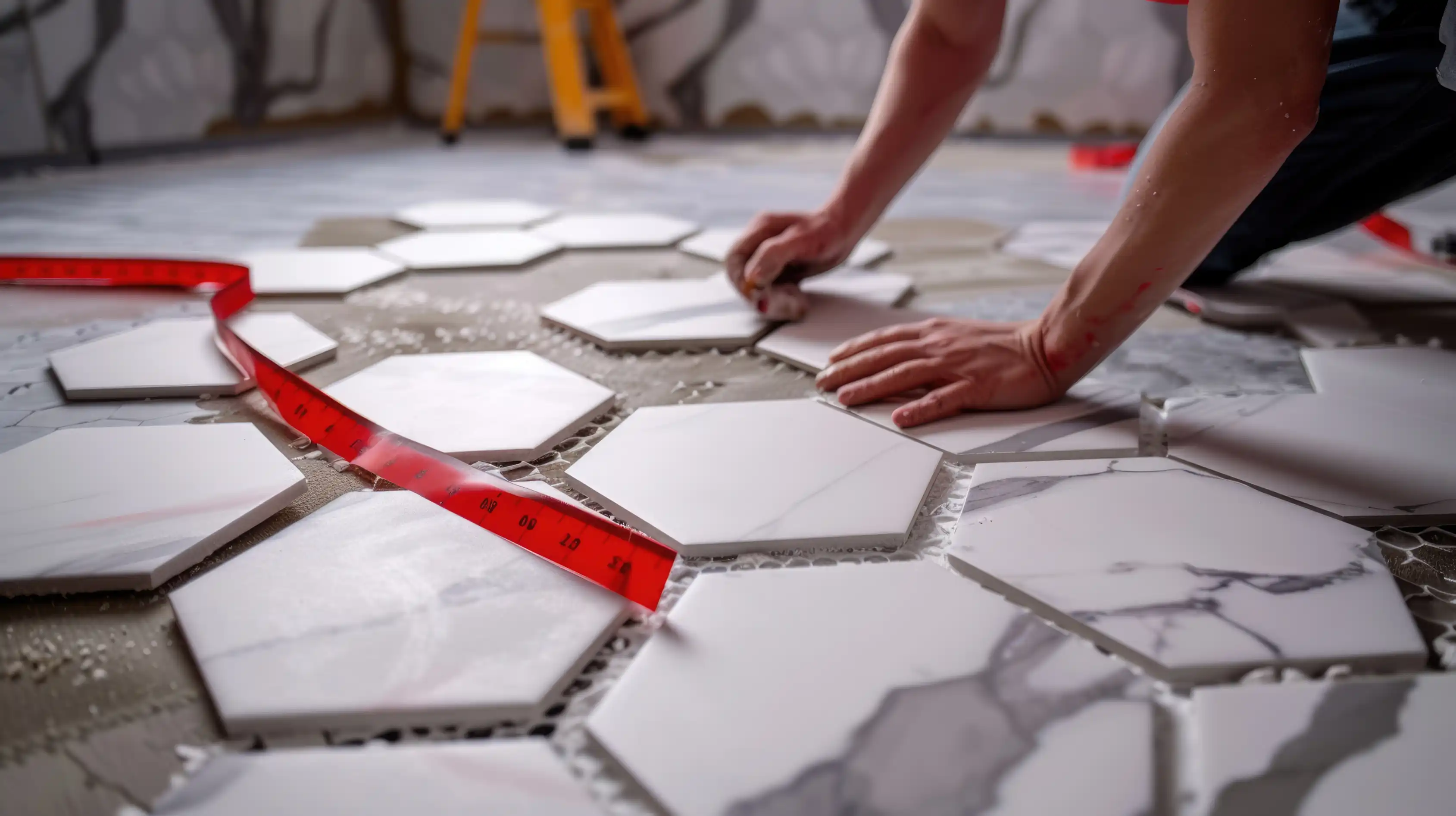
Proper substrate preparation and adhesive application are important for achieving a durable tile installation.
How to Prevent Cracked and Loose Tiles
The key to good tile performance begins before the first tile is installed. The substrate and tile type, adhesive, moisture, and layout/movement provisions are all considered during a professional installation.
Practical prevention for a project in Melbourne includes:
- Ensuring the substrate is firm, thoroughly clean, smooth enough and appropriately prepared.
- Selecting an adhesive that is appropriate for the tile, substrate and method of application.
- Leaving adhesives, screeds and waterproofing systems to cure according to their specifications.
- Using correct movement joints and perimeter detailing where necessary.
- Making sure waterproofing is properly installed before tiling in wet rooms.
- Watching for early indicators like movement, hollow-sounding tiles, cracked grout, or lifting.
Ali Star Tiling Melbourne's process includes surface preparation, repairing and levelling any area that needs it, waterproofing wet areas, selecting the right adhesive, maintaining regular, even grout joints, sealing movement joints with silicone, and a final inspection. Ali Star Tiling has served Melbourne and Victoria since 2009, working across both residential and commercial tiling.
When Should You Call a Professional Tiler?
If you have more than one cracked tile, cracks appearing over time, a tile that sounds hollow, a tile that is loose or lifting, water staining, eroded grout, or a floor that has moved, call a professional. These signs may indicate an underlying problem that a cosmetic patch can't fix. Replacement can be simple if one tile has an impact mark and the surrounding tiles are still in good condition. If symptoms are broad and persistent, a proper diagnosis should precede any repair. It can also be beneficial to use a local Melbourne tiler, as they understand the specific demands of bathrooms, kitchens, balconies, patios and outdoor areas, which vary from suburb to suburb. Our tile repair Melbourne guide covers repair options and costs in more detail.
Need a tiling assessment in Melbourne? Call Ali Star Tiling on 0455 233 816 or email us for a free assessment. We assess cracked, hollow and lifting tiles across Melbourne's western and northern suburbs.
FAQs