Selecting the best grout is often as significant as picking attractive bathroom tiles. While grout lines may seem like a minor detail, they still affect your bathroom's look and make cleaning easier. If your bathroom is used often and is moisture-laden, the right grout can help it last longer. One of the frequently asked questions among homeowners is: epoxy grout vs cement grout which is best for bathroom floors in Australia?
Both options have advantages, but they differ in water resistance, ease of maintenance, durability, and installation. At Ali Star Tiling Melbourne, we know you need the right materials for beautiful, attractive, and durable tiled surfaces.
A Client Story: Selection of the right grout in Melbourne.
A Melbourne resident was renovating a family bathroom and wanted to choose the right grout for the project. The first material the family wanted to use was less expensive cement grout. But because several family members used it daily, they worried about keeping the shower area clean. During the material selection process, we explained the differences between epoxy and cement grout. The homeowner considered the cleaning and maintenance required and felt epoxy grout would be an appropriate choice for the shower area. To find the best grout for the other bathroom areas, they measured each area individually. This practice not only ensures performance but also balances appearance and cost, rather than choosing only the lowest-cost product. It also shows the significance of professional counsel when designing bathroom tiling.
What is the difference between Epoxy Grout and Cement Grout?
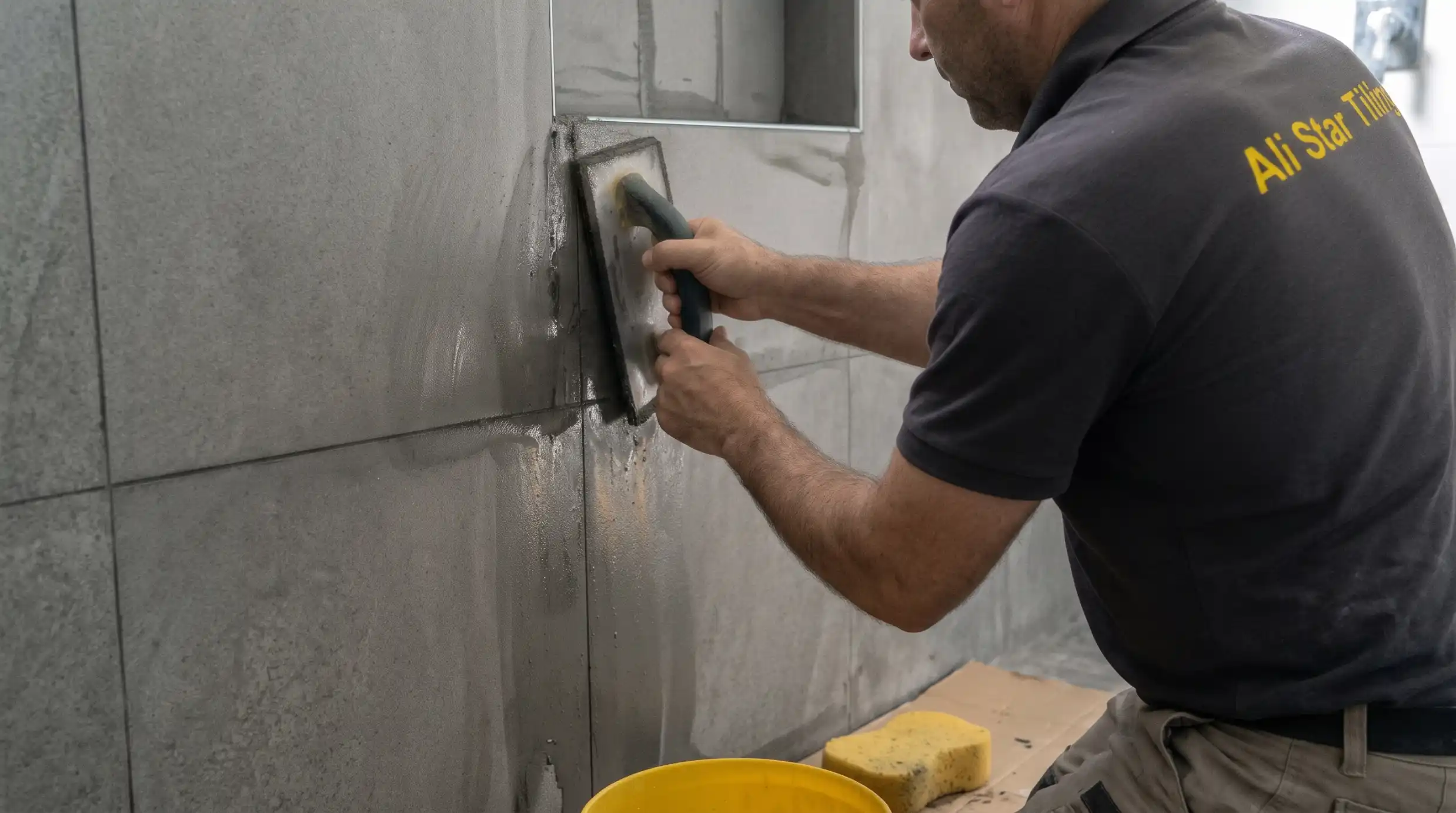
Epoxy grout is made with epoxy resins, a hardener, and filler materials. When cured, it forms a dense joint that is waterproof, stain-resistant, and resistant to many household cleaning chemicals. Cement grout is commonly made with cement, Fine Fillers, and water retaining additives. If not properly sealed, it may absorb moisture and become porous. When properly installed, both can produce attractive finishes. Your choice will depend on your bathroom's needs, tile type, and budget.
Epoxy grout has advantages and disadvantages.
Epoxy grout is popular in modern bathroom renovations because of its performance in moisture prone environments.
Advantages of epoxy grout:
- Water resistant: Its dense composition absorbs very little water.
- Stain resistance: It resists typical bathroom stains, soap residue, and dirt.
- Low maintenance: It requires less maintenance than cement grout.
- Durability: Good for showers and bathrooms used frequently.
- Color consistency: Usually keeps its appearance for a long time.
Disadvantage of epoxy grout:
- Higher cost: Materials and professional installation are more costly.
- Difficult application: Mixing and cleaning require careful attention.
- Limited working time: installer must work as efficiently as possible before it cures.
- Specialist installation: Any residue that remains on the tiles can be difficult to remove if the tiles are not installed properly.
Although these are drawbacks, epoxy grout may still be worth the investment for homeowners who want a durable product that is easier to clean.
Cement Grouting for bathrooms: benefits and limitations
Cement grout is still used today because it's easy to set, versatile, and inexpensive.
Its benefits include:
- Cost-effective: Usually less expensive than epoxy grout.
- Easy application: Experienced tilers can apply it efficiently.
- Color options: Various shades can match bathroom tiles.
- Repair-friendly: If damaged in part, it can often be removed and replaced.
Its limitations:
cement grout's moisture absorbing qualities can contribute to staining, mold-related discoloration, and disintegration if not properly maintained. However, sealing the grout with a compatible grout sealer can help minimize water absorption; it does not make the cement grout waterproof. Cleaning, sealing as needed and frequent repairs are important.
Grout for Showers: Worth the investment?
Showers are the areas that face constant exposure to water, drastic temperature fluctuations, and soap residue. So, you need to focus on choosing the right type of grout. Epoxy showers are ideal for bathrooms, since their low absorption helps them look better and hold less stain, which the cleaning process can remove easily. They can be installed on appropriate shower floors, walls, and niches. Grout, however, should not be considered to be a substitute for waterproofing. If you install these tiles over waterproofing, it is crucial to install a proper waterproofing system underneath the tiles. Australian wet area waterproofing standards should meet the requirements of any building codes, including, where relevant, AS 3740. Make sure the installation complies with current regulations and the manufacturer's instructions.
Epoxy Grout VS Cement Grout: which is more cost effective?
The cheapest option right now is not necessarily the most economical over time.
| Comparison | Epoxy grout | Cement Grout |
|---|---|---|
| Initial cost | Higher | Lower |
| Water absorption | Very low | Porous |
| Stain resistance | Excellent | Moderate |
| maintenance | Generally lower | More Attention |
| installation | specialised | Straightforward |
| sealing | Usually unnecessary | Often recommended |
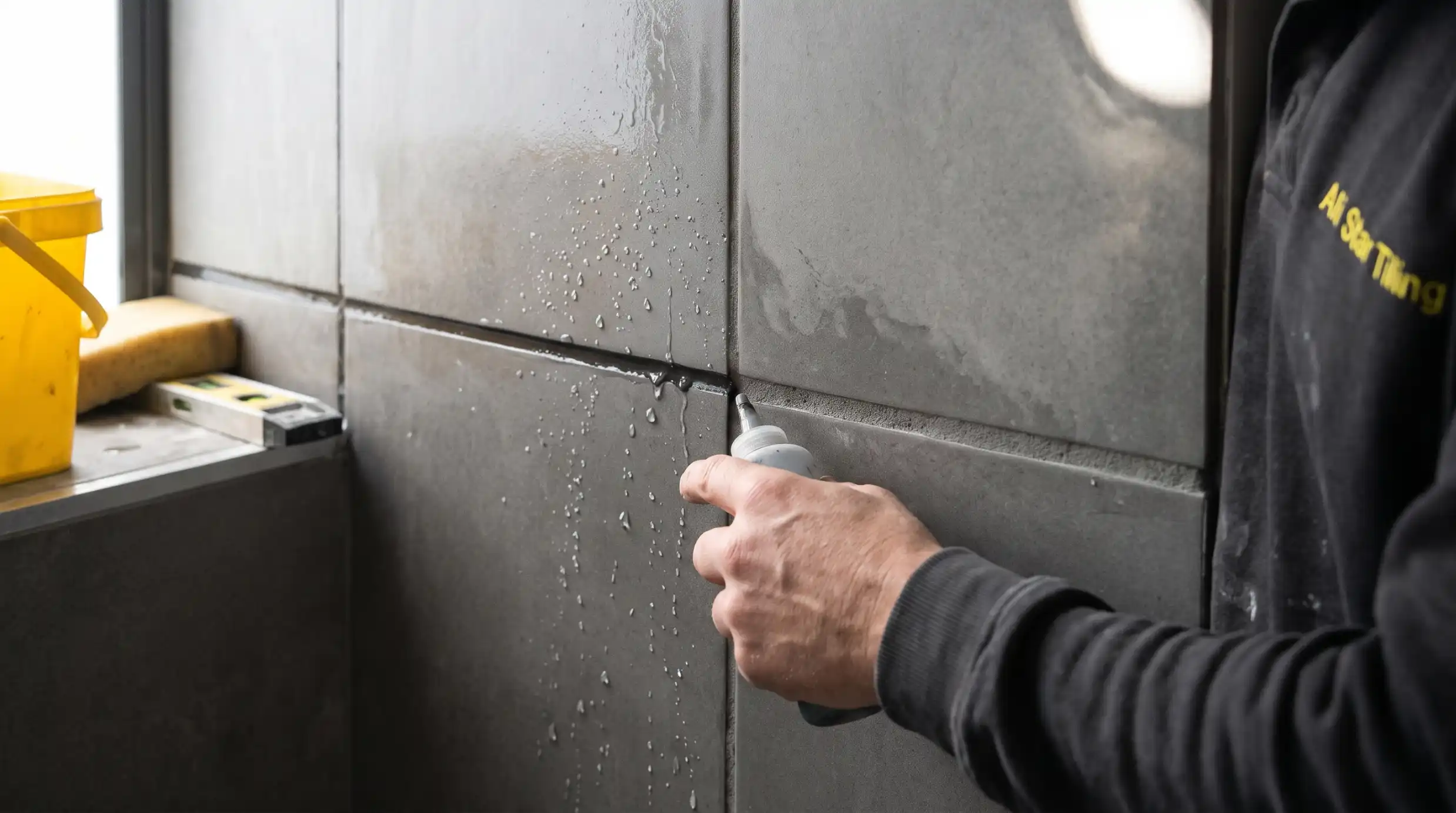
Some epoxy can be more expensive, but if its stain and durability resistance are important, the expense may be worth it. For limited renovation budgets, and homeowners who don't mind maintenance, cement grout will do.
How to Choose the Best Grout for Bathrooms
Every house is unique, so every house has its own grout solution. When deciding, take these things into account:
- Bathrooms: Vibrant family bathrooms may be better suited to stain-resistant materials.
- Installation Costs: Consider future maintenance needs and your budget.
- Tile material: Check compatibility with natural stone and textured tile materials.
- Cleaning preferences: When selecting a cleaning product, consider the level of clean expected.
- Installation quality: Even premium quality requires proper grout preparation and correct use during installation.
Ali Star Tiling is a bathroom tiling and waterproofing company serving all of Melbourne, including Melton, Kurunjang, Werribee, Point Cook, Truganina, and surrounding suburbs. We specialize in selecting materials, preparing surfaces, and delivering professional finishes.
Final Takeaway
If your goal is to maintain your bathroom floor as well as possible and keep it stain-resistant and durable, epoxy grout is the best option compared to cement grout. Budget conscious renovations and maintenance may still find cement grout a viable option. In the end, the ideal bathroom grouting solution depends on the type of bathroom tiles, the shower's needs, the budget, and maintenance preferences. Also, sourcing the right materials and professional installation are crucial. Need to renovate your bathroom in Melbourne? Call Ali Star Tiling Melbourne on 0455 233 816 for bathroom tiling expert tips and a complimentary tile quote! Let's design a Class-A Bathroom that will be Grand, Beautiful, and Low-Maintenance for Years!