
You pick new tiles, have them installed, and end up with uneven tiles. It's annoying when pale tiles start to develop dark patches and white marks, or when the color varies after days or weeks. Are these issues with the tile, grout, or installation? Often, the change is linked to moisture below the surface. One way to address it is to apply waterproofing to the tiles, but there are other solutions as well. Weather conditions can also be a factor in Melbourne, including rain and drying.
Real example: a Melbourne Homeowner's Example
The owner of a house ferry in Glen Waverley has white coloured tiles fitted in their kitchen. After 14 days, a few tiles next to the back door are darker, and white patches appear beside a couple of grid joints. Marks can be easily modified by scrubbing. We observe water quality within the substrate and rainwater in and around the building entrance. The next step is to determine whether the moisture is 'residual' or 'ongoing' and address the cause.
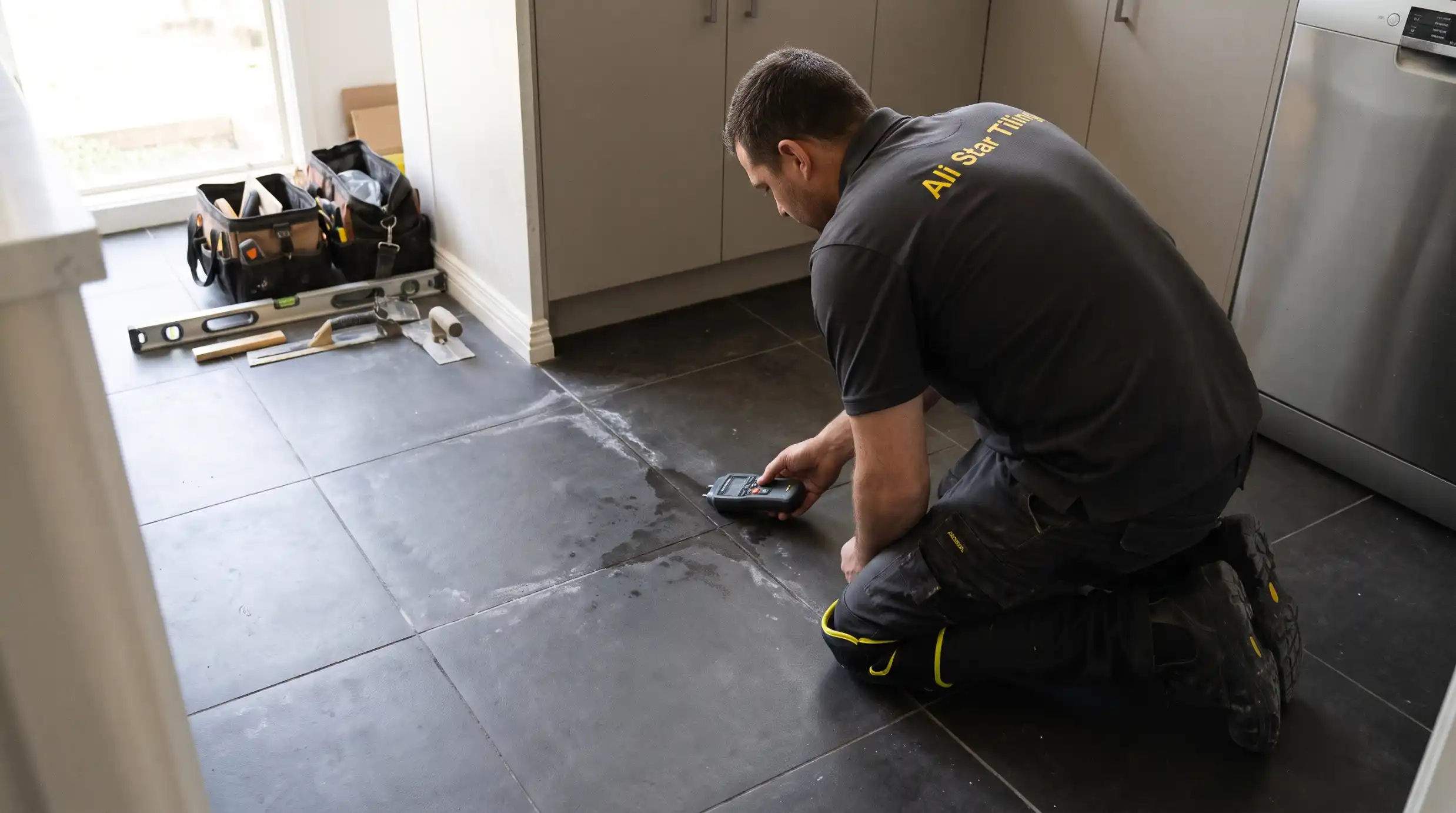
What Does Efflorescence on Tiles Mean?
Efflorescence occurs when water infiltrates cement based materials, leaches natural salts, and carries them to the surface as a white powdery deposit. As the water dries up, the salts are left behind. You can find it in grout lines, under tiles, or on concrete. You can't remove it by wiping as long as moisture is still flowing through the installation. It indicates water flow and doesn't necessarily mean there is a problem with the tile.
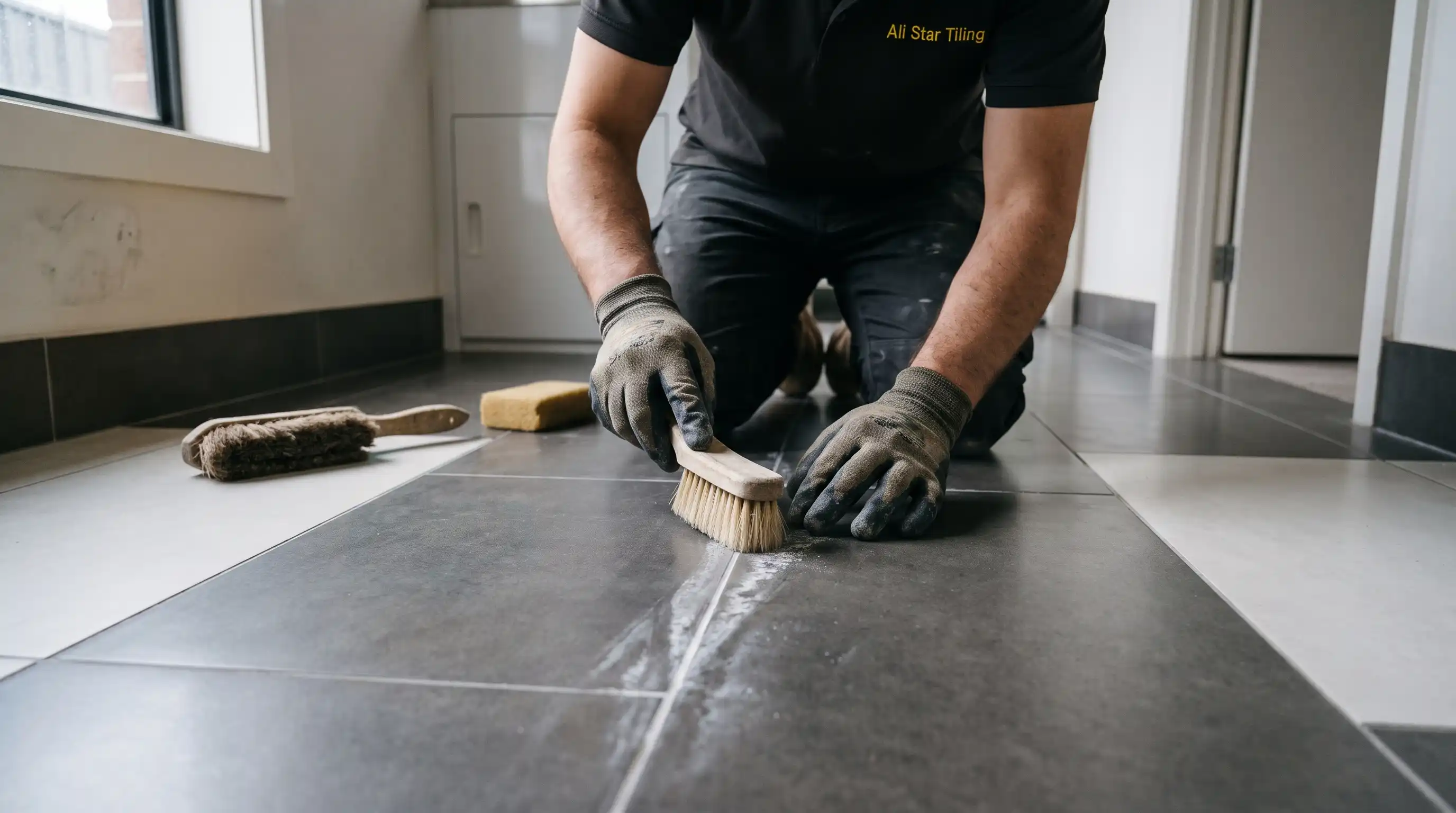
The moisture is trapped under the tile
A new installation takes time to cure and dry. Tiles can be laid too soon and/or offer inadequate ventilation, causing moisture to be retained in adhesive, mortar beds, screeds and concrete. This may show up as darkness in lighter or more porous tiles. The installation can dry, and sunlight can bleach your patches, but if a patch is unchanging or growing, it should be checked. Please don't use a sealer to conceal them.
Efflorescence is bringing Salts to the Surface
White or chalky patches around the grout lines could well be efflorescence. As water flows through grout, mortar, or concrete, it dissolves salts and then deposits them as it evaporates. It may appear in areas that get wet, such as bathrooms, laundries, balconies, or outside. Moisture can come from the installation itself, rain, a plumbing leak, or a wet substrate. Although removing the deposit may provide some relief, it won't solve the problem if you don't fix the source.
Grout is drying unevenly
Sometimes grout will be darker in certain joints during the curing process. Causes include moisture differences, inadequate ventilation, adding too much water to the mix, and over-washing during installation, which can alter the finished color of the product. Follow the manufacturer's curing instructions, and don't re-wash during the grout's curing period. A tiler can confirm whether there is no residue, grout variation, or moisture underneath if it persists.
Cleaner or Grout Residue is affected the finish
Sometimes, tiles are not changing color; instead, a film causes dullness, cloudiness, or staining. This may be caused by cement haze, detergent dust, and grout residue. Some cleaners are not suitable for marble, limestone, and other sensitive finishes, and abrasive pads can scratch tiles. Use cleaning agents as directed (follow care instructions), test in an out of the way area, and do not mix chemicals.
A Leak or Damp Substrate causing Tiles to be wet
Dark patches that persist or return could indicate a continued water source(s). This can be caused by leaking pipes, failing shower waterproofing, a leak from the balcony, drainage issues, or rising damp. Record whether marks get wetter when it rains or when you shower. Tight tiles and crumbling grout matter too, and so does damp odor. The water patch that has leaked through may not be directly over the leak, as water may have infiltrated the substructure beneath the tiles. Do not use cleaning for an ACTIVE LEAK. You must determine and fix the source.
Different Tiles absorb different moisture.
Tiles have varying absorbency. Dense porcelain absorbs less water than natural stone and some unglazed ceramics. Other natural variations in shade, pattern, and texture are also possible. Some areas can be dark initially because they absorb moisture, and staining can occur because of natural mineral variation in the landscape. Check with your supplier to see whether any variances are expected and whether sealing is allowed. A damp issue shouldn't be covered up with a sealer.
Bad conditions or unfit materials during installation.
This final look relies on the tile, but also on the other element, everything from substrate preparation to the use of adhesive, grout, mixing proportions, and curing matters. Inappropriate products may stain or bond poorly, or may get into the tile or on the surfaces. Not all color variations are a problem. Review product specifications and assess the area before deciding whether a repair is needed.
If the new tile color changes, what should you do?
- Take photos of the patches and when they occur after rain, showers, washing, etc. See if they are powdery, cloudy, or within the tile itself.
- There are a couple of candidate measures that can be taken to help:
- Wait for the curing and drying time for adhesives, grout, and screeds.
- Clean with cleaners specific to your tile type.
- Wait to seal the surface until you determine moisture levels and material suitability.
- Check for plumbing leaks, drains, doorways, and wet-area junctions.
- If stains bleed beyond the original area, or if they stay on the floor and/or loose tiles, contact the tiler or installer, or another qualified tiler.
- Ali Star Tiling is a tiling company serving Melbourne and regional Victoria, with over 15 years in the industry and over 200 completed jobs. An assessment can help differentiate normal dry down from year to year differences that may indicate a problem that needs addressing. Request that the results and ideas be explained.
Final Takeaway
While tiles may look different while drying, if they come up in the same shape repeatedly, it could be a cause for concern; if they are dark, it should go to the expert. Moisture movement is a common cause of efflorescence on tiles, and tile discoloration can also result from grout, cleaning agents, grout variation, or a leak. Always discover the cause before applying strong cleaners or sealers. Call a tiling specialist if marks remain; they can inspect the installation and determine the cause. Call Ali Star Tiling to learn about Melbourne homeowners.
FAQs