
If you've seen the white, chalky or powdery appearance on your outdoor tiles or grout, you're not alone. Melbourne homeowners commonly see it after rain, washing, or in damp weather. In many instances, the substance is actually efflorescence, a salt deposit that is formed whenever moisture gets through porous product and evaporates.
Melbourne Client story
Marry recently had quite a few rainy days during the summer and now she sees some white powder around the grout line of her backyard patio. She thought that the tiles were deteriorating and purchased a general outdoor tile cleaner. Some of the residue was removed by the cleaner, but following rainy periods, it reappeared. A professional assessment was conducted, considering cleaning/drainage. The surface was thoroughly cleaned, and the surrounding area was inspected for water movement, cracked joints, and any water storage areas. The moral of Marry's story is clear: it's easy to get rid of a deposit that has left its mark on the surface, but this doesn't always solve the cause of the problem. A surface assessment could help identify if there is an overall moisture problem or just accumulation.
What is the white powder on outdoor tiles?
Efflorescence is usually referred to as the whitish powder. It is created by soluble mineral salts being dissolved by water in or under grout, masonry, or a type of adhesive. Water flows to the surface and evaporates, leaving the salts behind as a white and/or grey crystalline deposit.
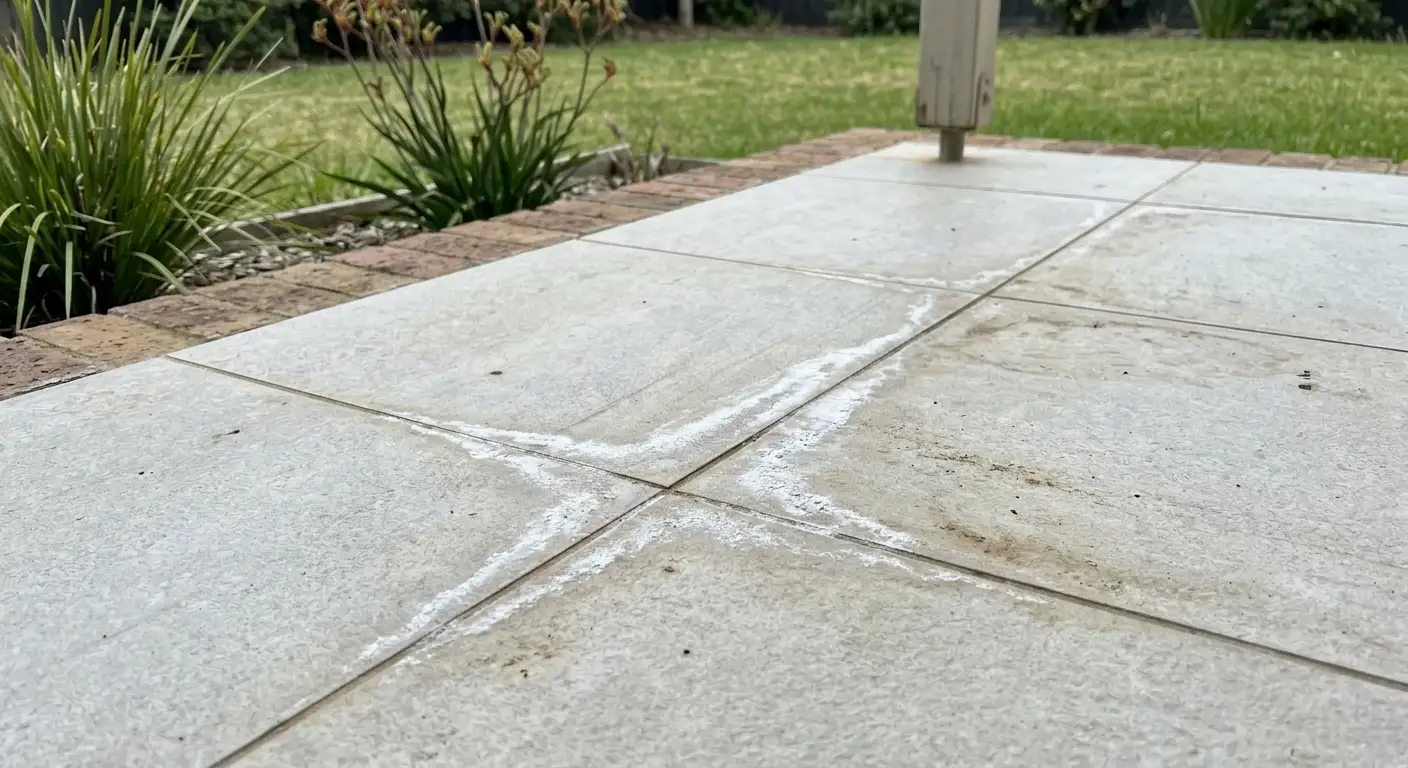
Is efflorescence a sign of a bigger tile problem?
Not necessarily. It is reasonable to have an occasional, light deposit that may be small in amount. However, if the efflorescence recurs, it should be noted, as it indicates that water and soluble salts are present. Consider what is in the powder; don't just look at the powder. Drainage or substrate problems and/or problems where the tile is loose, or the grout has cracked, could indicate drainage, substrate, or installation problems. Being aware of the seasonal variation of Melbourne's weather conditions creates the need for appropriate falls, drainage and ideal outdoor materials. When looking at outdoor tiling projects, Ali Star Tiling Melbourne takes into consideration surface preparation, drainage, tiling used, and the correct systems. Melbourne services include any patio garden, alfresco garden, and pool surrounds.
How do you remove efflorescence from outdoor tiles?
Start gently. Sweep/vacuum up loose powder before watering. On many types of surfaces, dry brushing may be sufficient, or a pH-neutral tile cleaner may be recommended, as it will not harm the grout or tile. Don't take any of the strong acids or harsh chemicals for granted. To avoid damaging the grout or the sealers, some natural stones are acid-sensitive, and harsh products can affect them. Try a bit in an obscure location, and follow directions for use. If there is a larger area or it is very dirty, then professional outdoor tile cleaning will be more controlled. The technique utilized should be based on the type and texture of the tile, the condition and severity of the grout accumulation.
A practical outdoor tile cleaning process
Good cleaning is not just about the strongest pressure; it's also about the strongest chemical. Its goal is to eliminate the deposit without affecting the surface.
- Determine the type of tile/grout.
- Clear away loose soil, leaf litter, and surface soil dust.
- To ensure the product works in a specific area, choose a cleanser compatible with your surface and check in a small area.
- Scrub tile and grout properly, using appropriate equipment.
- Thoroughly rinse and let the surface dry.
- See if the white deposit comes back.
Drainage is another factor that needs to be taken into account when cleaning a tile in your home in Melbourne outdoors. Scrubbing up and wiping away what can be seen might just get you one day. If any at all.
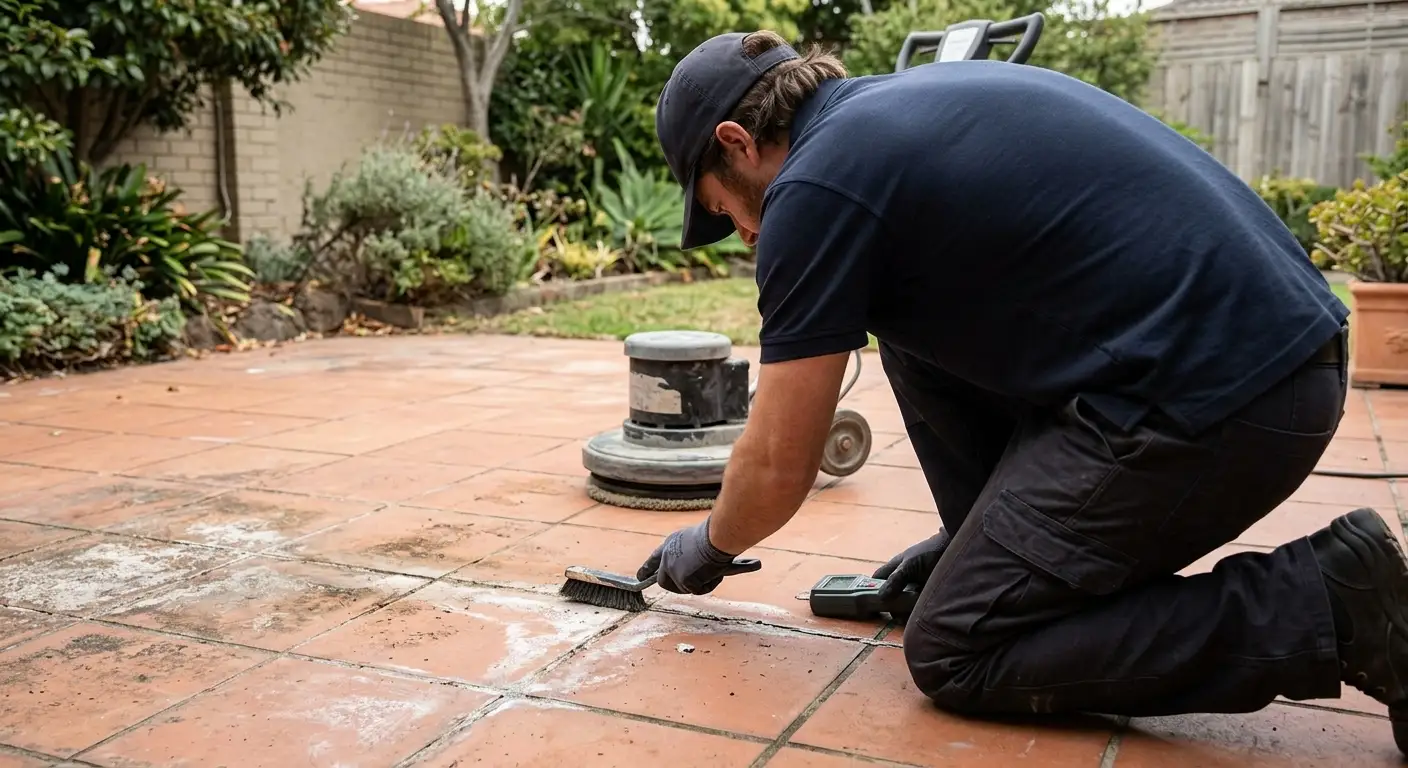
If the white powder returns, what will happen?
At the point when it becomes receding, it's the time to start an investigation, which is when cleaning should start. See if the downpipes drain in the vicinity, tiles get wet from rainfall with water gathering, or if drainage is not sufficiently sloped off the surface. Look also for problems at the grout joints and perimeter sealant. Deteriorated joints can let extra water into the system. A tiler should evaluate a tile installation and refrain from continuing to clean the surface if a tile is lifting, or if there are cracks or holes; the tile should be evaluated. Here's where tile and grout cleaning know-how and tiling know-how come together. Cleaning will show whether the grout and tile surface is in good condition; an experienced tiler can also identify moisture management issues that cleaning can't fix and may require replacing the moldings during the re-tiling process.
Can professional tile cleaning remove all white deposits?
Professional cleaning will get rid of or greatly minimize floor surface efflorescence, but the deposit may still return routinely. Any deposits may reappear if salts continue to be carried to the surface by the movement of moisture. A tile cleaning Melbourne expert may come in handy with textured outdoor porcelain or natural stone and grout in which dirt and deposits have a tendency to settle. Ali Star Tiling Melbourne recommends that cleaning techniques are chosen depending on the surface and provides assessments on location.
How can I prevent efflorescence?
Prevention begins with good installation and sensible maintenance. If a tiled area is outdoors, there should be good falls and drainage to prevent unwanted water from remaining around the tiled area. The correct specification of the tiles, the integrity of movement joints, and grout are also important considerations. Ask about sealing if the surface is natural stone, determining whether or not it is suitable for the stone and site. Sealing is not a drainage alternative, but it can help to implement a responsible maintenance program.
When to call in a professional?
Professional advice is good if efflorescence is extensive, it keeps recurring, or if there are tiles that are loose, cracked grout, dampness/drainage issues. Additionally, if cleaning with an acid-based cleaner on natural stone surfaces or surfaces you are not familiar with is desired, it is a good idea to obtain advice before using the cleaner. Since 2009 Ali Star Tiling Melbourne has been tiling Melbourne and Victoria, they provide tiling, waterproofing and cleaning of tiles outdoors.
Final Takeaway
If there is a white powder on outdoor tiles, it is likely to be mineral salt that moisture has brought to the surface. If one encounters light deposits, then with careful cleaning, the deposits can be removed, but if one keeps seeing the efflorescence again, then the drainage, grout, sealants and underlying installation should be investigated. When thinking about outdoor tile cleaning for Melbourne homeowners, effective cleaning recognizes that issues of appearance alone don't cover the entire story. Correct solutions involve a combination of dealing with moisture, drainage issues and cleaning while on the surface. When the residue still returns, or damage to the tiles and grout become apparent, it's time to call a professional to determine the next steps before a maintenance becomes a repair.
FAQs