
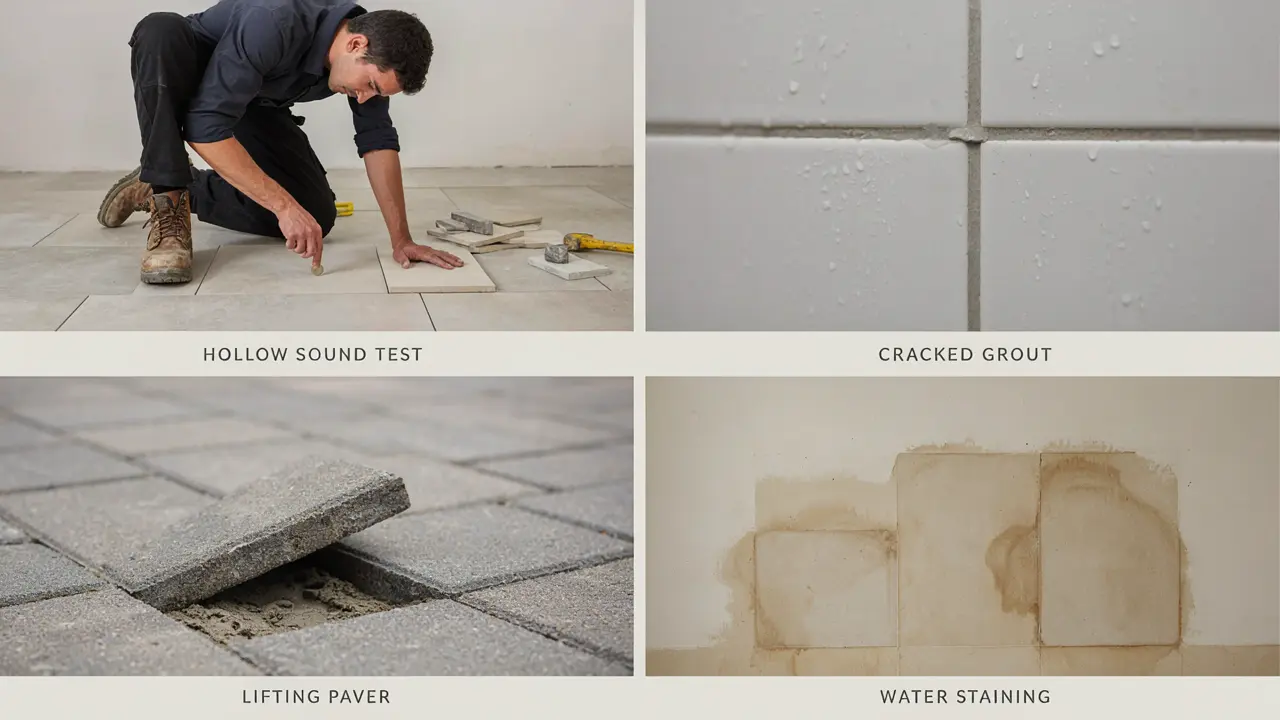
Not all tiling problems are obvious at installation. Some emerge gradually over months or years, a tile that sounds slightly different when walked on, grout that cracks at the same joint every winter, an outdoor paver that has shifted almost imperceptibly but enough to catch a toe. Others appear suddenly and dramatically: a bathroom wall tile that falls off, outdoor tiles that have cracked through their first Melbourne winter, or the slow water stain appearing on a wall that suggests something has gone wrong behind the tiles.
Every one of these failures has a specific cause. And in almost every case Ali Star Tiling has assessed across Melbourne's western and northern suburbs, the cause is not the tile itself it is a decision made during installation. Wrong adhesive, skipped substrate preparation, missing expansion joints, inadequate waterproofing, or a layout that did not account for the specific conditions of the site.
This guide diagnoses the seven most common tiling failures in Melbourne homes: what each looks like, what causes it, how to identify it before it gets worse, and what remediation actually costs in 2026.
How to Read This Guide
Each problem is presented with a diagnosis showing the root cause, the correct fix, and the realistic remediation cost. If you recognise your problem in one of these descriptions, the diagnosis gives you a starting framework for understanding what is actually required before you call anyone. For a wider view of tiling costs in Melbourne, or to learn how to choose a tiler who gets these details right, see our related guides.
Problem 1: Hollow Tiles
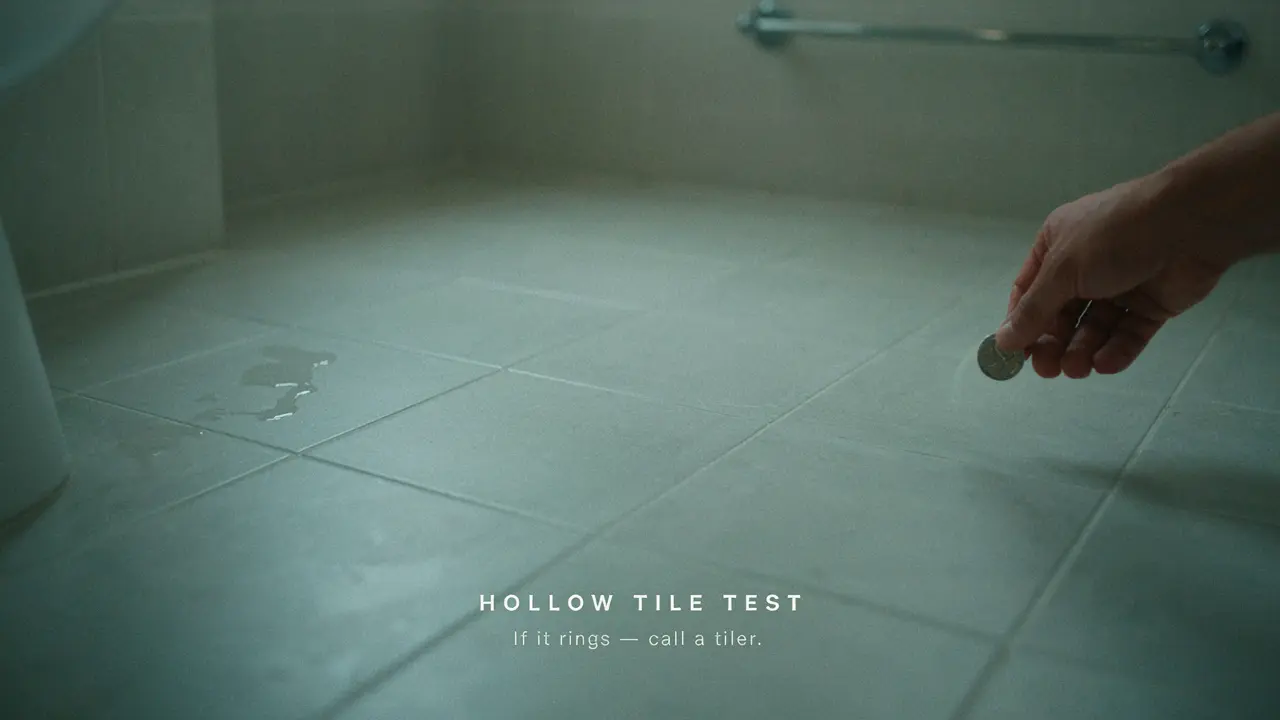
You walk across a tiled floor and one or more tiles produce a dull, hollow thud when stepped on or tapped distinctly different from the solid sound of a well-bonded tile. This is one of the most common tiling complaints across Melbourne homes built in the 2000s and 2010s, and one of the most reliably diagnosable without specialist tools.
How to Test for Hollow Tiles
Tap each tile systematically with a coin, a knuckle, or the handle of a screwdriver. A well-bonded tile returns a dense, solid sound. A hollow tile returns a distinctly duller, more resonant thud the sound of a tile suspended over a void rather than fully bedded in adhesive. The difference is immediately recognisable once you have heard both.
Map the hollow tiles before calling a tiler. Knowing which tiles are affected and how many helps the tiler assess the scope and provide an accurate quote before attending the site.
Problem: Hollow tiles dull thud when tapped, tiles not fully bonded to substrate.
Root cause: Insufficient adhesive coverage beneath the tile. The most common cause is 'spot fixing' adhesive applied in three or five spots rather than as a full, notched-trowel spread across the full tile back. AS 3584 requires minimum 95% adhesive coverage in wet areas and 80% in dry areas. Spot fixing produces coverage of 20-40% leaving voids that the tile bridges without bonding.
The fix: Individual hollow tiles can sometimes be re-bonded by injecting low-viscosity adhesive through a drilled hole, a specialist technique that works on some floor configurations. In most cases, hollow tiles must be carefully lifted, the substrate cleaned, and the tiles re-laid with correct full-coverage adhesive application, the same approach covered in our tile repair Melbourne guide. Where the substrate beneath is damaged or the existing tiles cannot be removed intact, replacement tiles may be needed.
Typical Melbourne remediation cost: $80-$250 per tile for individual repair including adhesive injection or lift-and-relay. For widespread hollow tile failure across a large area, full strip-out and relay is typically more cost-effective than tile-by-tile repair.
Why do tiles go hollow in Melbourne homes?
Hollow tiles in Melbourne homes are almost always caused by insufficient adhesive coverage during installation, a technique called spot fixing where adhesive is applied in isolated spots rather than spread fully across the tile back with a notched trowel. This leaves voids under the tile that cause the hollow sound and will eventually cause the tile to crack or detach completely. The problem is most common in installations from the 2000s-2010s when spot fixing was more prevalent. Ali Star Tiling assesses and repairs hollow tiles across Melbourne's western and northern suburbs.
Problem 2: Cracked Grout at Internal Corners
Grout applied at the internal corners of a bathroom where the floor meets the wall, or where two tiled walls meet at 90 degree cracks within months of installation. The crack appears at the same junction every time it is re-grouted, and re-grouting does not fix it.
Problem: Cracked grout at internal corners recurring crack regardless of how many times it is re-grouted.
Root cause: The internal corner is a movement joint; the two surfaces meeting at that corner move independently as the structure responds to temperature, moisture, and loading. Rigid cement grout applied at a movement joint will always crack because it cannot accommodate the movement. This is not a failure of the grout product, it is a fundamental misapplication. The Australian Standard AS 3958 specifies that internal corners in tiled wet areas must be finished with flexible silicone, not grout.
The fix: Remove the cracked grout from all internal corners. Clean the joint thoroughly to remove grout and adhesive residue. Apply a bead of flexible silicone in a colour matched to the existing grout. The silicone accommodates movement and will not crack at the junction under normal conditions.
Typical Melbourne remediation cost: $150-$400 for a standard bathroom depending on the number of internal corners and the accessibility of the work. A DIY option if the homeowner is comfortable with silicone application the product cost is $15-$30 per tube.
Problem 3: Cracked Tiles on a Timber Subfloor
Floor tiles in a room over a timber subfloor are cracking not from impact, but with cracks running across multiple tiles in a consistent direction or pattern. The cracking worsens over time and new cracks appear despite no obvious cause.
Problem: Tiles cracking across multiple panels in a consistent pattern no impact damage.
Root cause: Timber subfloors move. Melbourne's seasonal moisture variation causes timber to expand and contract, and the subfloor deflects under load. Standard tile adhesive is rigid and cannot accommodate subfloor movement. When the subfloor moves beyond the adhesive's tolerance, the stress transfers to the tile and cracks it. The primary causes are: tiles installed directly over a timber subfloor without a decoupling membrane or fibre cement overlay; insufficient subfloor rigidity (joist spacing too wide for the tile load); or flexible adhesive not specified for a timber substrate.
The fix: The correct fix depends on the subfloor condition. If the subfloor is structurally adequate but lacks the correct preparation, strip the cracked tiles, install a decoupling membrane or fibre cement sheet overlay, and relay with flexible polymer-modified adhesive rated for timber substrates. If the subfloor itself has inadequate rigidity, additional blocking or a structural overlay is required before any tiling.
Typical Melbourne remediation cost: $1,500-$5,000+ depending on the area affected, whether decoupling membrane or fibre cement overlay is required, and the extent of structural work needed beneath the floor.
Why are my floor tiles cracking in my Melbourne home?
Floor tiles cracking in a pattern across multiple tiles in a Melbourne home (particularly on timber subfloors) are almost always caused by subfloor movement, the timber subfloor expanding, contracting, or deflecting under load in a way that the rigid tile adhesive cannot accommodate. The tile cracks because it cannot flex. The fix requires identifying the cause (subfloor movement, insufficient rigidity, or wrong adhesive) before relaying tiles. Ali Star Tiling assesses cracked tile problems across Melbourne's western and northern suburbs and provides written quotes for the appropriate remediation scope.
Problem 4: Lifting or Cracking Outdoor Tiles After Winter
Outdoor tiles alfresco, patio, pool surround, pathways that were fine through summer are cracking or lifting after Melbourne's first proper winter. The damage appears across multiple tiles simultaneously rather than as isolated impacts.
Problem: Outdoor tiles lifting or cracking after winter widespread, not impact damage.
Root cause: Two possible causes, both related to Melbourne's winter conditions. First: non-frost-proof tiles. Tiles that have not been rated as frost-proof absorb water through their body. Water that enters the tile body freezes in winter, expands by approximately 9%, and cracks the tile from within. Second: non-frost-proof adhesive or bedding. Even frost-proof tiles can lift if the adhesive beneath them is not outdoor-rated and frost-resistant; the adhesive bond fails under freeze-thaw cycling and the tile lifts from below. Melbourne's western suburbs experience overnight temperatures below zero regularly through June-August in Sunbury, Bacchus Marsh, and Melton, making frost rating a genuine practical requirement.
The fix: Identify the cause: if the tiles themselves are cracked through their body, they are non-frost-proof and must be replaced with correctly specified outdoor-rated, frost-proof tiles, as set out in our outdoor tiling Melbourne guide. If the tiles are intact but lifting, the adhesive has failed and the tiles must be re-laid with outdoor-rated adhesive. In either case, a full strip-out of the affected area and relay with correct specification is required.
Typical Melbourne remediation cost: $100-$200/m2 for strip-out and relay with correct outdoor-rated tiles and adhesive. Additional cost if non-frost-proof tiles must be replaced with new frost-proof tiles at current supply prices.
Problem 5: Water Behind Bathroom Tiles
Signs of water damage appearing around or behind bathroom tiles discoloration, mould at the base of the wall, tiles that sound hollow near the floor, water staining appearing on the ceiling of the room below, or a persistent damp smell that does not resolve with ventilation.
Problem: Water infiltration behind bathroom tiles mould, staining, hollow tiles near floor, damp smell.
Root cause: Failed or inadequate waterproofing. Water from shower use has found a pathway through the tile system typically through failed grout joints, cracked silicone at movement joints, or a waterproofing membrane that was inadequately applied (insufficient coverage, missed junctions, or absent entirely). Once water reaches the substrate, it migrates through fibre cement or plasterboard and eventually reaches the framing behind. The damp smell is often the first sign; visible staining and mould are later-stage indicators of significant moisture accumulation.
The fix: The remediation scope depends on how far water has penetrated. At minimum: strip the affected tiles, assess and treat the substrate for mould, repair or replace damaged substrate material, apply new AS 3740-compliant bathroom waterproofing, and relay tiles with correct grout and silicone finishing. In more serious cases where water has reached the framing: remove the affected wall section, treat or replace damaged framing, and rebuild from the framing out.
Typical Melbourne remediation cost: $2,000-$12,000 depending on how far the water damage has spread and whether framing is involved. Early intervention is significantly cheaper; water damage remediation cost grows rapidly the longer the problem goes unaddressed.
How do I know if my Melbourne bathroom has a waterproofing failure?
Early signs of bathroom waterproofing failure in Melbourne include: grout cracking or falling out of shower joints without impact damage; tiles that sound hollow when tapped near the floor or base of walls; a persistent musty or damp smell from the bathroom that does not resolve with ventilation; mould appearing at the base of shower walls despite regular cleaning; or water staining emerging through tiles or grout. If any of these signs are present, the problem should be assessed promptly waterproofing failure remediation cost grows the longer water infiltration continues. Ali Star Tiling assesses suspected waterproofing failures across Melbourne's western suburbs.
Problem 6: Grout Falling Out of Joints
Grout is falling out of tile joints either in isolated spots or across larger areas. The tiles themselves are intact and solid, but the grout between them is loose, crumbling, or absent. Re-grouting the empty joints produces the same result within months.
Problem: Grout falling out of joints recurring despite re-grouting.
Root cause: Three common causes. First: grouting over tiles that were not fully cured if the tile adhesive had not fully set when grout was applied, minor movement during the remaining adhesive cure cycle fractured the grout bond. Second: incompatible grout product for the joint width fine grout applied in joints wider than its specification crumbles. Third: grout applied at movement joints that should be siliconed at internal corners, changes of plane, or over structural joints, rigid grout will always fail. Fourth: in wet areas, inadequate grout sealing allows water penetration that degrades the grout body over time.
The fix: For isolated grout failure: rake out the failed grout to a minimum 6mm depth, clean the joint thoroughly, and re-grout with the correct product for the joint width and application. For grout failure at internal corners or movement joints: replace with flexible silicone. For widespread grout failure suggesting an adhesive cure issue: assess the tile bond and address any hollow tiles before re-grouting.
Typical Melbourne remediation cost: $15-$30/m for grout raking and re-grouting by a professional tiler. Individual joints: $50-$150 minimum call-out. Full bathroom re-grout: $400-$900 depending on area and tile format.
Problem 7: Lippage Uneven Tile Edges
Adjacent tiles are not level with each other; there is a visible or feelable step from one tile to the next. On floor tiles, this creates a tripping hazard. On wall tiles, it catches light and makes the installation look uneven even when the tiles themselves are flat.
Problem: Lippage a step or height difference between adjacent tiles.
Root cause: Three causes. First: uneven substrate. If the substrate beneath is not flat to the tolerance required for the tile format, the tiles follow the substrate unevenness. Large format tiles (600x600mm+) are more sensitive to substrate flatness than small tiles. Second: inconsistent adhesive bed depth. If the adhesive bed varies in thickness, tiles at thicker adhesive areas sit higher than those at thinner areas. Third: tile warpage. Some tile batches have inherent warpage; the tile itself is not perfectly flat which causes lippage regardless of substrate or adhesive quality. Rectified tiles (ground to precise dimensions) have lower warpage tolerance than non-rectified tiles.
The fix: Existing lippage in a completed installation is difficult to correct without removing and relaying the affected tiles. If the cause is substrate unevenness, the substrate must be levelled before re-laying. If the cause is tile warpage, a different tile batch or format should be selected. Prevention is significantly more effective than remediation for lippage. Thinking of laying new tiles over the old ones? Read when tiling over existing tiles is safe first.
Typical Melbourne remediation cost: Lippage remediation requires lifting and relaying the affected tiles. Cost depends on scope: $80-$200 per tile for isolated areas, or full re-lay pricing for widespread lippage.
Quick Reference: Melbourne Tiling Problem Diagnostic
| What You See | Likely Problem | Urgency | First Step |
|---|---|---|---|
| Dull thud when tile is tapped | Hollow tile insufficient adhesive coverage | Medium will worsen over time | Map all hollow tiles. Get a written assessment. |
| Cracked grout at corners, recurring | Wrong finish at movement joint needs silicone | Low cosmetic but ongoing | Remove and replace with flexible silicone. |
| Multiple tiles cracking in pattern (timber floor) | Subfloor movement wrong adhesive or prep | High worsens with each season | Stop using the area. Get structural assessment. |
| Outdoor tiles cracking/lifting after winter | Non-frost-proof tile or adhesive | High accelerates with each winter | Assess frost rating. Plan full re-lay. |
| Damp smell, mould at shower base, staining | Waterproofing failure water behind tiles | Very high remediation cost grows rapidly | Get an immediate professional assessment. |
| Grout falling out repeatedly | Incorrect grout product, movement joint, or adhesive cure issue | Medium | Identify the cause before re-grouting. |
| Step between adjacent tiles | Lippage substrate or adhesive depth inconsistency | Low-medium cosmetic and tripping hazard | Assess whether remediation or full re-lay is appropriate. |
Got a tiling problem in Melbourne that needs fixing? Call Ali Star Tiling on 0455 233 816 or email alistartiling@yahoo.com. We assess and repair failed tiling across Melbourne's western and northern suburbs. Free site assessments, written quotes. Mon-Sat 7am-6pm.