Choosing tiles for a Melbourne home renovation is one of the most consequential design decisions most homeowners make, and one of the most confusing. Showrooms present hundreds of options, and once tiles are fixed to a floor or wall they are there for fifteen to twenty years.
This guide cuts through the options with practical advice from the tiler's perspective. Not every beautiful tile is right for every application — the best tile for your home is the one that performs correctly in its specific location and looks as good in year ten as it does at installation. Here is the Ali Star Tiling room-by-room guide to the best tiles for Melbourne homes in 2026, drawing on what we see working well across our floor tiling projects in Melton, Caroline Springs, Sunbury, Werribee, and the broader western and northern suburbs.
Melbourne Tile Trends 2026: What's Dominating the Market
Before the room-by-room breakdown, here is what Ali Star Tiling is installing most frequently across Melbourne's western and northern suburbs right now.
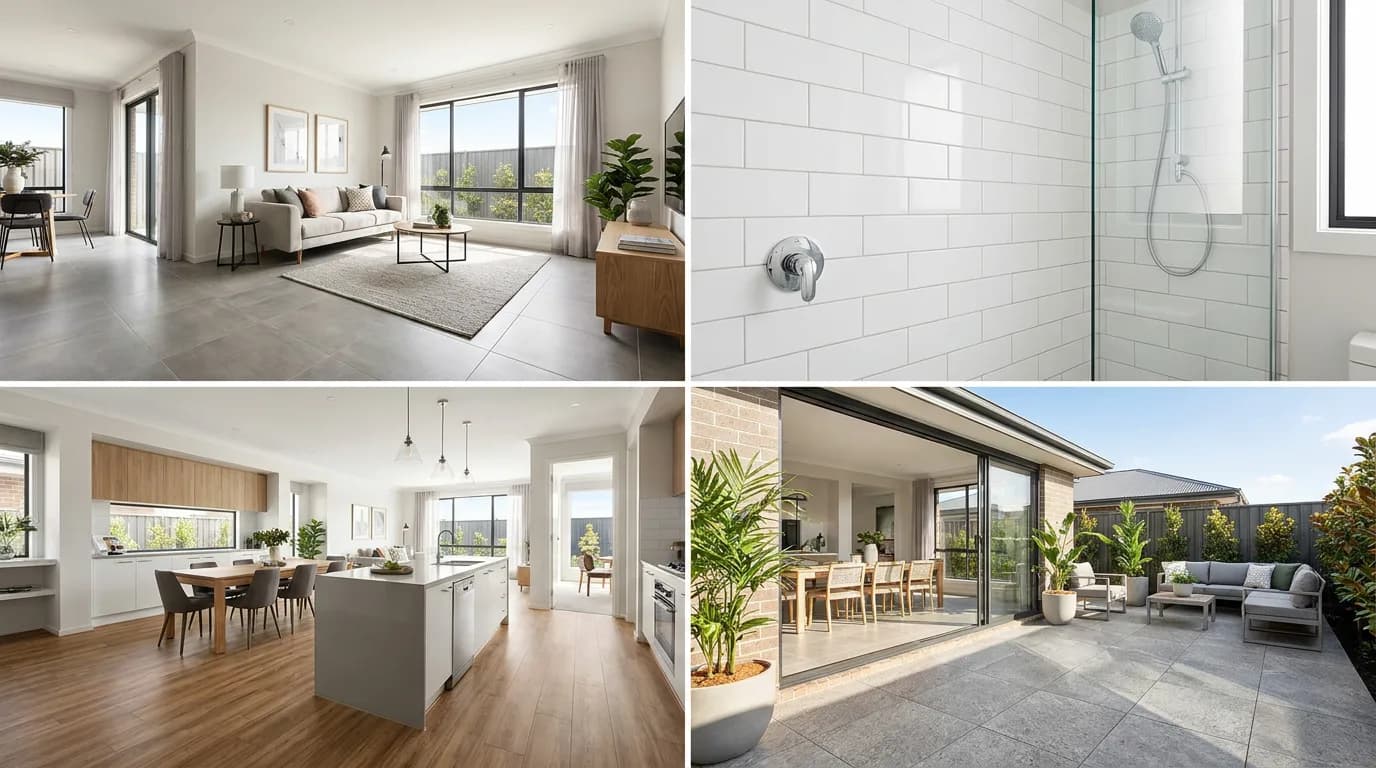
- Large-format porcelain, everywhere. 600x600mm is now the standard starting format for Melbourne floor tiles, and 600x1200mm is growing rapidly. The western growth corridor — Melton, Tarneit, Wyndham Vale — installs large-format porcelain as the default in virtually every new home.
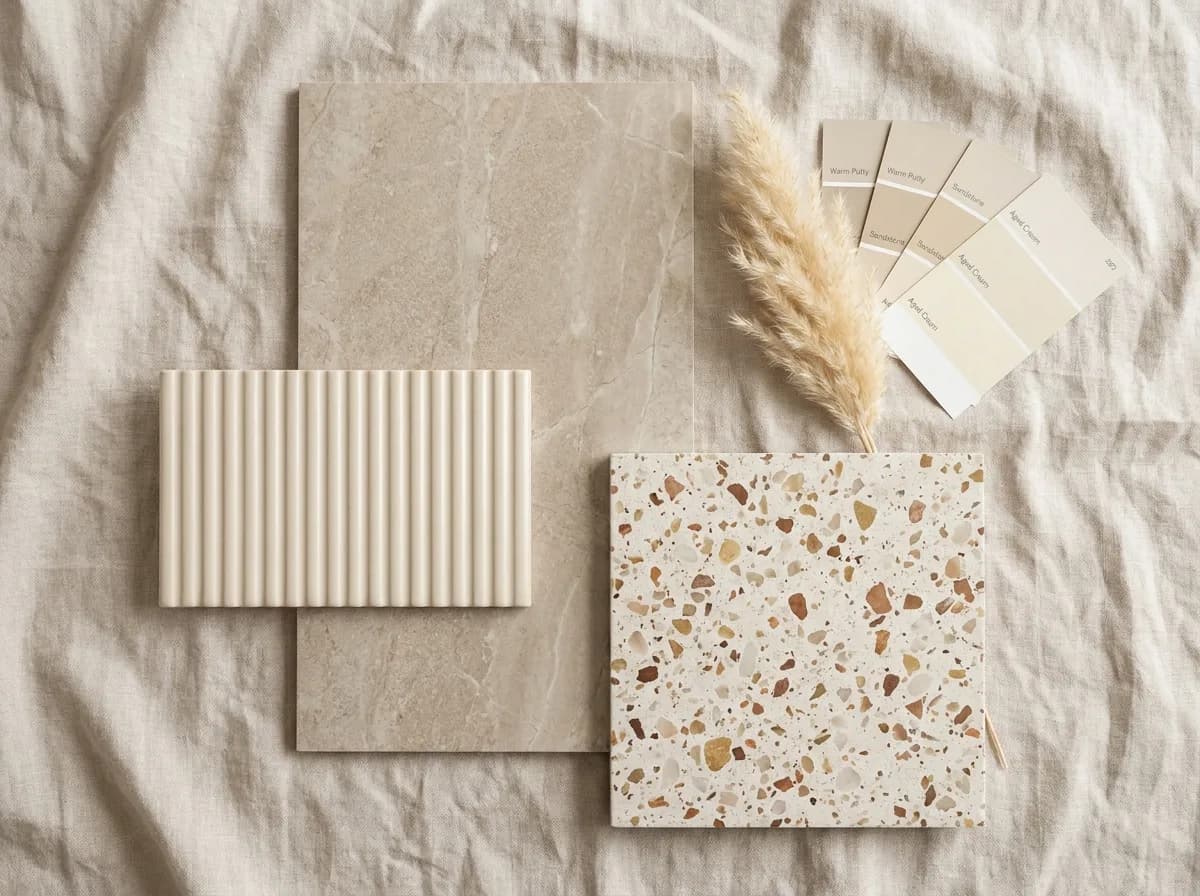
- Warm neutrals replacing cool greys. The cool grey and charcoal palette that dominated Melbourne homes through 2018-2023 is giving way to sandy beige, warm greige, soft terracotta, and earthy off-whites, complementing timber joinery and brass fixtures.
- Fluted and textured tiles on walls. Vertically ribbed or fluted tiles are the dominant feature tile in Melbourne bathrooms and kitchens in 2026, installed as a feature panel with plainer tiles completing the surrounding surfaces.
- Timber-look porcelain in open-plan spaces. Timber-look planks (200x1000mm to 300x1200mm) remain one of the most requested floor tiles, particularly where the floor runs continuously from kitchen to dining to living area.
- Terrazzo and terrazzo-look tiles. Terrazzo has moved from hospitality into Melbourne residential renovations, available in polished (walls, decorative use) and honed or structured finishes (floors).
- Continuous indoor-outdoor tile flow. The single most requested outcome in Melbourne alfresco renovations is a tile that flows from inside to outside through glass stacker doors, using the same tile family in an outdoor-rated thickness.
Best Tiles for Melbourne Bathrooms
The bathroom is where most Melbourne tile budgets are concentrated, and where aesthetic aspiration and technical requirement are most demanding. Here is what Ali Star Tiling installs most successfully in Melbourne bathroom renovation projects.
Best Bathroom Floor Tiles
| Tile | Format | Why It Works | What to Avoid |
|---|---|---|---|
| Structured or textured porcelain | 300x300mm to 600x600mm | P4 slip rating for wet areas, non-porous, easy clean. The practical workhorse of Melbourne bathroom floors. | Polished finish — dangerously slippery when wet regardless of appearance. |
| Small-format mosaic (porcelain or glass) | 50x50mm to 100x100mm | P4-P5 slip rating from the dense grout joint pattern. Excellent for shower floors with complex drainage falls. | White grout on shower floors — discolours rapidly and never looks clean after 6 months. |
| Honed natural stone (travertine, limestone) | 400x400mm to 600x600mm | Premium aesthetic, unique character. Honed finish provides adequate slip resistance. | Polished marble or stone — beautiful sample, dangerous floor. Requires regular sealing. |
Best Bathroom Wall Tiles
- Large-format rectified porcelain (600x300mm, 600x600mm). The dominant Melbourne bathroom wall tile in 2026. Fewer grout lines, cleaner look. Requires a very flat substrate and correct adhesive coverage.
- Subway tile (100x200mm to 130x400mm). The enduring Melbourne classic, available in satin, gloss, and handmade looks. Stacked, running bond, or herringbone all work.
- Fluted or ribbed feature tile. The 2026 Melbourne bathroom feature tile, installed as a single feature wall behind the bath or as a shower feature panel.
- Zellige-look or handmade-effect tile. Slight colour variation and surface irregularity give a handcrafted character that suits heritage Melbourne homes and Moroccan or artisanal aesthetics.
Q: What are the best bathroom tiles for Melbourne homes?
A: For Melbourne bathroom floors, structured or textured porcelain in 300-600mm formats with a minimum P4 slip rating is the most practical choice — non-porous, durable, safe, and easy to maintain. For bathroom walls, large-format rectified porcelain (600x300mm or 600x600mm) produces the most contemporary result with minimum grout lines. Fluted or ribbed feature tiles as a single accent wall are the most popular 2026 trend in Melbourne bathrooms. Ali Star Tiling installs all of these across Melbourne's western and northern suburbs — call 0455 233 816 for a free quote.
Best Tiles for Melbourne Kitchens
Kitchen Floor Tiles
The kitchen floor in an open-plan Melbourne home is one of the most visible and highest-traffic surfaces in the entire house. It must handle chair scraping, appliance rolling, food and liquid spills, and regular cleaning, while looking appropriate alongside the adjoining living and dining areas — a topic our kitchen tiling guide covers in full.
- Large-format porcelain in satin finish (600x600mm to 600x1200mm). The dominant Melbourne kitchen floor tile. Non-porous, PEI 4-5 rated, satin finish for safety when wet, and available in the warm neutral palette currently preferred across Melbourne kitchens.
- Timber-look porcelain plank (200x1000mm to 300x1200mm). Most popular where the kitchen flows into a living area with a warmer, more residential aesthetic.
- Concrete-look porcelain (600x600mm). Popular alongside matt joinery and industrial-look fixtures. Works best in kitchens with natural light and lighter cabinetry.
For splashback styles and feature wall pairings that go with each of these floor tiles, see our kitchen tiling ideas Melbourne guide.
Kitchen Splashback Tiles
- Subway tile in oversized formats (100x300mm, 130x400mm). The Melbourne kitchen splashback standard, with fewer grout lines than the classic 75x150mm.
- Large-format porcelain slab (600x1200mm). The prestige splashback choice — continues the benchtop stone look up the wall with minimal visible joints.
- Fluted tile feature (single panel behind cooktop). The 2026 kitchen trend equivalent of the bathroom feature wall, with subway or plain tiles completing the run.
- Gloss white or cream in smooth glazed finish. Always the practical choice for splashbacks — textured tiles behind a cooktop accumulate grease in the surface texture.
Best Tiles for Melbourne Living Areas and Hallways
The living area floor is the highest-visibility tile decision in most Melbourne homes, setting the visual tone for the entire ground floor and, in open-plan homes, working across kitchen, dining, and living zones simultaneously.
| Tile Type | Format | Tone | Best For | Avoid |
|---|---|---|---|---|
| Large-format porcelain (satin) | 600x600 to 800x800mm | Warm grey, greige, sandy beige | Open-plan contemporary Melbourne homes. The most popular 2026 choice. | Polished finish on floors — shows every mark. |
| Timber-look porcelain plank | 200x1000 to 300x1200mm | Warm oak, grey ash, dark walnut | Open-plan homes wanting timber warmth without timber's moisture sensitivity. | Very dark tones in small or poorly lit rooms. |
| Concrete-look porcelain | 600x600mm | Cool grey, charcoal | Architects' homes, industrial-influenced design, new builds in the growth corridor. | Small rooms — cool tones and large formats can feel cold. |
| Terrazzo-look porcelain | 600x600mm | White with aggregate, warm speckle | Heritage Melbourne homes, period renovation, character apartments. | Bold colour combinations in conservative contexts. |
| Natural stone (travertine, limestone — honed) | 400x400 to 600x600mm | Sandy warm, cream | Premium renovations, Hamptons-influenced homes, period Melbourne properties. | High-traffic homes with children/pets without regular sealing. |
Hallways
Melbourne hallways present a specific design challenge: narrow, high-traffic, and the first thing seen on entry to the home. The tile format and layout pattern both affect how the hallway reads spatially:
- Diagonal lay. Makes a narrow hallway feel wider and adds visual interest. Increases tile wastage by 15-20% and labour by 20%.
- Running bond (brick pattern). Visually lengthens the hallway — good for short hallways that benefit from appearing longer.
- Large format straight lay. Creates the longest, most uninterrupted sightline. Works best in wider hallways where the full tile width is visible.
Best Tiles for Melbourne Outdoor Areas
Outdoor tiles in Melbourne must be frost-proof, slip-resistant (minimum P3, P4 for pool surrounds), and dimensionally stable under Melbourne's thermal range — from below 5 degrees in winter to above 40 degrees in summer. A tile that looks perfect indoors may crack, become slippery, or degrade within two Melbourne winters if it lacks the correct outdoor tiling specification. Tiling a garden path or pool edge? Our guide to garden non-slip tiles covers slip ratings, drainage and maintenance.
Best Alfresco and Patio Tiles
- Outdoor-rated porcelain pavers (18-20mm, structured finish). The most popular alfresco tile in Melbourne in 2026. Frost-proof, P3-P4 slip rated, available in large formats (600x600mm, 800x800mm) in warm grey and sandy tones.
- Travertine (honed or brushed finish). The classic Melbourne alfresco material — natural, warm, works with landscaping and rendered walls. Requires sealing and periodic maintenance.
- Bluestone (sawn or flamed finish). Durable, naturally slip-resistant, handles Melbourne's thermal range exceptionally well. Available as pavers and bullnose edge tiles for steps and coping.
Continuous Indoor-Outdoor Tile
The most requested design outcome for Melbourne alfresco renovations is matching or coordinating the indoor floor tile through glass stacker doors to the outdoor surface. The practical requirement: the outdoor tile must be an outdoor-rated version of the indoor tile — thicker, frost-proof, slip-rated — in the same colour family.
Q: What outdoor tiles are best for Melbourne alfresco areas?
A: For Melbourne alfresco areas, outdoor-rated porcelain pavers in 18-20mm thickness with a structured or textured finish achieving at least P3 (preferably P4) slip resistance are the most practical 2026 choice. They are frost-proof for Melbourne winters, UV-stable, low-maintenance, and available in the warm neutral tones currently preferred in Melbourne outdoor design. Travertine and bluestone in honed or sawn finishes are natural stone alternatives. Polished tiles are never appropriate for outdoor use. Ali Star Tiling installs outdoor tiles with correct drainage falls and expansion joints across Melbourne's western suburbs.
What to Avoid: Common Tile Selection Mistakes
- Polished tiles on any floor. Polished porcelain, marble, and travertine all become dangerously slippery when wet regardless of how premium they look in a showroom. Reserve polished finishes for walls and decorative applications.
- White grout on high-use surfaces. White grout in a shower floor, kitchen splashback, or outdoor area is a maintenance commitment most Melbourne homeowners regret within the first year. Mid-grey, charcoal, or colour-matched grout is always more practical.
- Textured wall tiles behind the cooktop. A textured or ribbed splashback tile behind a cooktop accumulates grease in the surface texture. Reserve textured tiles for areas away from direct cooking splatter.
- Indoor tiles used outdoors. Standard indoor ceramic and porcelain are not frost-proof. A beautiful indoor tile used outdoors will absorb water, freeze in winter, and crack. Always confirm the outdoor rating before installation.
- Buying tiles before assessing the substrate. Large-format tiles (600x1200mm+) require a flatter substrate than smaller formats. Discuss tile format with your tiler before purchasing.
- Buying without adequate wastage. Standard wastage allowance is 10% for straight lay, 15% for diagonal, 15-20% for herringbone. Ordering exactly the calculated area without wastage invariably leads to a shortage mid-installation.
How to Choose Tiles for Your Melbourne Home: A Practical Framework
- Start with the room's performance requirements, not the aesthetic. Is it a wet area? What slip resistance is needed? What wear level will the floor face? These requirements narrow the field to tiles that will actually work — the same principle behind correct laundry tiling selection, where drainage falls and moisture exposure rule out most decorative options.
- Select the tile format based on the room size and substrate. Large-format tiles make rooms feel bigger but require flatter substrates. Discuss format with your tiler before visiting a showroom.
- Choose the tone family before the specific tile. Warm or cool? Light or dark? Neutral or character? Settling on the tone family first narrows the showroom visit to a manageable shortlist.
- Consider the grout colour before finalising the tile. Grout colour is as important as tile colour in the final appearance. Take tile samples home and assess them against grout samples before purchasing.
- Get your tiler's input before buying. A quote from Ali Star Tiling includes advice on tile suitability for the specific application, including how it affects overall tiling costs. Bring your shortlisted tiles to the site visit — your tiler can confirm whether the tile is appropriate for the substrate, location, and installation method required.
Choosing tiles before your home is even built? See our guide to tiling a new build in Melbourne for what builder tile allowances cover and where upgrades matter most.
Don't forget the grout. Our grout colour guide Melbourne explains why the grout choice matters as much as the tile itself.
Focusing on the bathroom specifically? Our bathroom tiling ideas Melbourne guide goes deeper on 2026 floor, wall, shower and feature tile styles.
Planning the alfresco or pool area? Our outdoor tiling ideas Melbourne guide covers alfresco, patio and pool surround styles for 2026.
Ready to tile your Melbourne home? Call Ali Star Tiling on 0455 233 816 or email us for a free written quote. We advise on tile selection, supply, and installation across Melbourne's western and northern suburbs. Mon-Sat 7am-6pm.
FAQs